

The evolution of transportation technology has always faced safety hurdles. Just as aviation required decades of safety refinements before achieving mainstream acceptance, autonomous vehicles today encounter similar challenges on their path to widespread adoption.
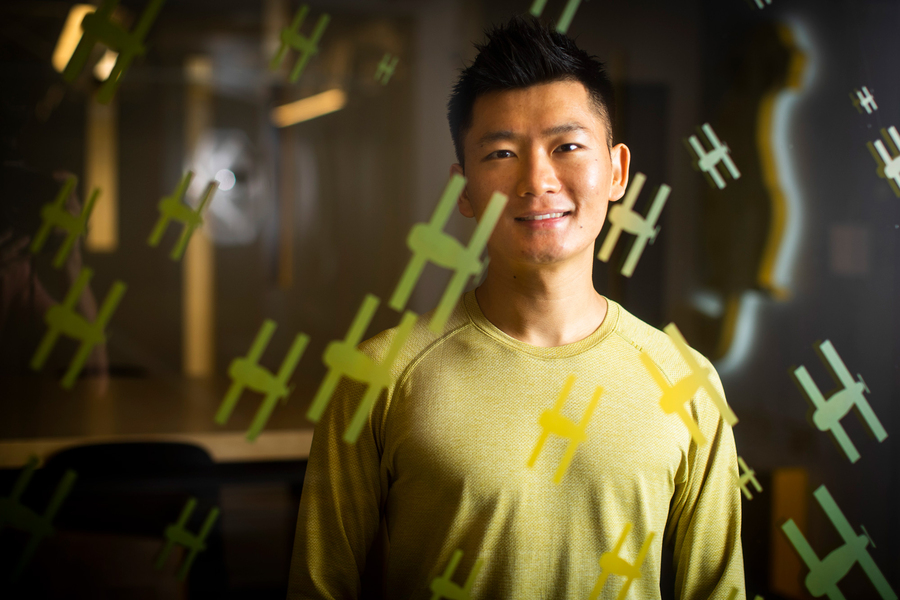
To address these safety concerns, graduate researcher Heng "Hank" Yang and his team have pioneered groundbreaking "certifiable perception" algorithms designed to enhance the safety mechanisms of next-generation self-driving cars and protect all road users.
Yang's journey to becoming a notable figure in robotics and autonomous systems wasn't straightforward. Growing up in China's Jiangsu province, he earned his undergraduate degree with highest honors from Tsinghua University. During his college years, his academic interests spanned diverse subjects from honeybee behavior to cellular mechanics. "My intellectual curiosity led me to explore numerous disciplines. Gradually, I found myself drawn to mechanical engineering because of its interdisciplinary nature," Yang explains.
Yang pursued his master's in mechanical engineering at MIT, where he focused on enhancing ultrasound imaging technology for liver fibrosis detection. It was during this project that he enrolled in a robotics control algorithms course that would shape his career trajectory.
"The course introduced me to mathematical optimization, demonstrating how abstract formulas can model virtually everything in our world," Yang recalls. "I discovered an elegant solution to complete my thesis, which revealed to me the transformative power of computational optimization in design. That's when I knew I had found my calling."
Currently a graduate researcher in the Laboratory for Information and Decision Systems (LIDS), Yang collaborates with Luca Carlone, the Leonardo Career Development Associate Professor in Engineering, on the challenge of certifiable perception. When autonomous vehicles perceive their surroundings, they rely on algorithms to estimate environmental parameters and their position. "However, conventional perception algorithms prioritize speed over reliability, offering no guarantees about the accuracy of the robot's understanding of its environment," Yang notes. "This represents one of the most significant challenges in the field. Our laboratory is developing 'certified' algorithms that can verify the correctness of these estimations."
The robot perception process begins when a self-driving car captures an image of another vehicle. This image is processed through a neural network, which identifies key features such as mirrors, wheels, and doors. The system then attempts to map these 2D keypoints to corresponding points in a 3D vehicle model. "We must solve an optimization problem to align the 3D model with the detected keypoints in the image," Yang explains. "This 3D alignment enables the robot to accurately interpret its real-world environment."
Each potential match must be evaluated for accuracy. With numerous keypoints that could be incorrectly matched (for instance, confusing a mirror with a door handle), this becomes a "non-convex" optimization problem that is computationally challenging. Yang's team, whose algorithm received the Best Paper Award in Robot Vision at the International Conference on Robotics and Automation (ICRA), has developed an approach that transforms this non-convex problem into a convex one, enabling successful matches. "When a match is incorrect, our algorithm knows how to continue searching until it finds the optimal solution, known as the global minimum. A certificate is issued when no better solutions exist," he elaborates.
"These certifiable algorithms have tremendous potential impact, particularly for safety-critical applications like self-driving cars that must demonstrate robustness and reliability. Our objective is to implement systems that alert drivers to take manual control when the perception system fails," Yang emphasizes.
When matching 2D images with 3D models, the system typically assumes the 3D model corresponds to the identified vehicle type. But how does the system respond when encountering an unfamiliar vehicle design? "In such cases, we must simultaneously estimate the vehicle's position and reconstruct its shape," Yang explains.
The team has developed an innovative approach to this challenge. The 3D model dynamically adapts to match the 2D image through a linear combination of previously identified vehicle designs. For example, the model might transition from an Audi to a Hyundai configuration as it registers the actual vehicle's specifications. Accurately determining the dimensions of approaching vehicles is crucial for collision prevention. This research earned Yang and his team recognition as Best Paper Award Finalists at the Robotics: Science and Systems (RSS) Conference, where Yang was also honored as an RSS Pioneer.
Beyond presenting at international conferences, Yang is passionate about communicating his research to broader audiences. He recently presented his work on certifiable perception at MIT's inaugural research SLAM public showcase. He also co-organized the first virtual LIDS student conference, bringing together industry leaders. His favorite presentations focused on bridging theory and practice, such as Kimon Drakopoulos' application of AI algorithms to optimize Greece's COVID-19 testing resource allocation. "I was particularly struck by his emphasis on how rigorous analytical tools can contribute to social good," Yang reflects.
Yang plans to continue investigating complex challenges related to safe and trustworthy autonomy through an academic career. His aspiration to become a professor is reinforced by his passion for mentoring, which he actively practices in Carlone's laboratory. He hopes his future research will yield additional breakthroughs that enhance human safety. "Many are recognizing that our current approaches to ensuring human safety are inadequate," Yang observes. "To achieve trustworthy autonomy, we must embrace diverse methodologies to design the next generation of safe perception algorithms."
"There must always be a failsafe mechanism, as no human-made system can achieve perfection. I believe it will require both rigorous theoretical frameworks and computational power to revolutionize what we can safely deploy in public environments," Yang concludes.

