

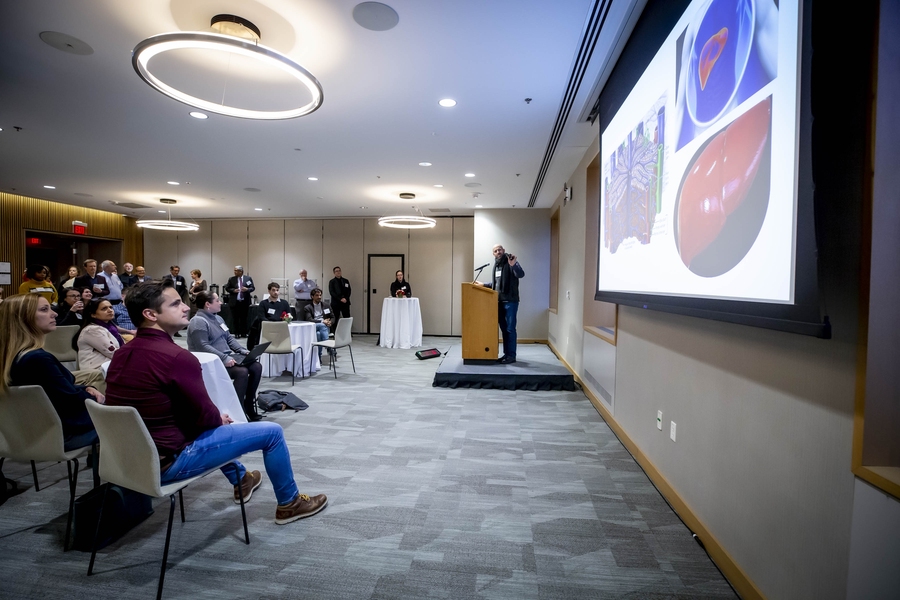
In a significant development for artificial intelligence in healthcare innovation, MIT and Takeda Pharmaceuticals have officially unveiled their collaborative research program this February. This pioneering MIT AI healthcare partnership aims to revolutionize human health and pharmaceutical development through cutting-edge AI technologies. Hosted by the renowned Abdul Latif Jameel Clinic for Machine Learning in Health (Jameel Clinic), this initiative brings together brilliant minds from MIT's School of Engineering and Takeda's pharmaceutical experts to tackle pressing healthcare challenges.
Following a rigorous selection process, nine transformative research projects have been chosen to lead the program's initial phase. These flagship initiatives, spearheaded by distinguished investigators from across MIT's departments and laboratories, will focus on critical areas including disease diagnosis, treatment response prediction, novel biomarker development, process optimization, drug discovery, and clinical trial enhancement.
"The exceptional creativity and scope of proposals we received has been truly remarkable," notes Anantha P. Chandrakasan, dean of the School of Engineering, Vannevar Bush Professor of Electrical Engineering and Computer Science, and co-chair of the MIT-Takeda Program Steering Committee.
Each research team will collaborate closely with Takeda's industry experts, fostering interdisciplinary approaches that bridge theoretical frameworks with practical applications. This synergy will drive algorithmic and platform innovations that could reshape healthcare delivery.
"This collaboration represents an unprecedented opportunity to harness the combined expertise of MIT and Takeda researchers across multiple disciplines," Chandrakasan adds. "In an era where human health faces enormous challenges, this academic-industry partnership holds tremendous promise. I eagerly anticipate witnessing how this program evolves and impacts society through its groundbreaking research."
"The collective enthusiasm and collaborative efforts between MIT and Takeda researchers have the potential to transform healthcare's future," states Anne Heatherington, senior vice president and head of Data Sciences Institute (DSI) at Takeda, and co-chair of the MIT-Takeda Program Steering Committee. "By leveraging AI to analyze complex data sets beyond human capability, we're building innovative solutions that could benefit patients worldwide."
The following inaugural projects exemplify the program's commitment to advancing AI in pharmaceutical research:
"AI-enabled, automated inspection of lyophilized products in sterile pharmaceutical manufacturing": Led by Duane Boning, Luca Daniel, Sanjay Sarma, and Brian Subirana, this project focuses on enhancing manufacturing quality control through artificial intelligence.
"Automating adverse effect assessments and scientific literature review": Under the direction of Regina Barzilay, Tommi Jaakkola, and Jacob Andreas, this initiative streamlines drug safety evaluation processes.
"Automated analysis of speech and language deficits for frontotemporal dementia": James Glass, Sanjay Sarma, and Brian Subirana are developing AI tools to detect and monitor neurological disorders through speech patterns.
"Discovering human-microbiome protein interactions with continuous distributed representation": Jim Collins and Timothy Lu are pioneering machine learning for drug discovery by exploring microbiome-protein relationships.
"Machine learning for early diagnosis, progression risk estimation, and identification of non-responders to conventional therapy for inflammatory bowel disease": Peter Szolovits and David Sontag are developing predictive models to personalize treatment approaches.
"Machine learning for image-based liver phenotyping and drug discovery": Polina Golland, Brian W. Anthony, and Peter Szolovits are leveraging AI to analyze liver characteristics and accelerate pharmaceutical development.
"Predictive in silico models for cell culture process development for biologics manufacturing": Connor W. Coley and J. Christopher Love are creating computational models to optimize biologic manufacturing processes.
"Automated data quality monitoring for clinical trial oversight via probabilistic programming": Vikash Mansinghka, Tamara Broderick, David Sontag, Ulrich Schaechtle, and Veronica Weiner are enhancing clinical trial integrity through AI-powered data monitoring.
"Time series analysis from video data for optimizing and controlling unit operations in production and manufacturing": Allan S. Myerson, George Barbastathis, Richard Braatz, and Bernhardt Trout are implementing AI to improve pharmaceutical manufacturing efficiency.
"The flagship research projects of the MIT-Takeda Program demonstrate the tremendous potential of AI to transform human health," emphasizes Jim Collins. "We're thrilled to collaborate with Takeda researchers on innovations that could reshape healthcare delivery globally."

