

Boiling serves a dual purpose beyond cooking your meals—it's a critical mechanism for cooling high-performance systems. By converting liquid into gas, energy dissipates from hot surfaces, safeguarding everything from nuclear reactors to advanced computer processors from dangerous overheating. However, when temperatures exceed critical thresholds, systems face what experts term a boiling crisis—a potentially catastrophic phenomenon.
During a boiling crisis, vapor bubbles rapidly form and coalesce before detaching from heated surfaces, creating an insulating layer that prevents effective cooling. This dangerous cycle accelerates temperature increases and can lead to system failures. Thanks to groundbreaking research combining high-speed infrared cameras with sophisticated artificial intelligence, scientists can now predict these dangerous events before they occur.
Leading this innovative study is Matteo Bucci, the Norman C. Rasmussen Assistant Professor of Nuclear Science and Engineering at MIT. His research team, whose findings were published in Applied Physics Letters, spent nearly five years perfecting a machine learning approach to streamline complex image processing. Their experimental setup features a 2-centimeter transparent heater submerged in water, with an infrared camera positioned beneath, capturing footage at 2,500 frames per second with remarkable 0.1-millimeter resolution. While traditional methods required researchers to manually count bubbles and measure their characteristics—a process taking three weeks—Bucci's neural network accomplishes this task in approximately five seconds. "Then we challenged ourselves: rather than merely processing data, could we extract meaningful insights using artificial intelligence?" Bucci explains.
The primary objective was developing a system to estimate proximity to a boiling crisis. Their AI analyzes 17 critical factors derived from image-processing algorithms: including nucleation site density (the concentration of bubble formation locations), mean infrared radiation at these sites, and 15 additional statistical measures about radiation distribution and temporal changes. Creating a mathematical formula to appropriately weight all these variables would overwhelm human researchers, but as Bucci notes, "artificial intelligence isn't constrained by our brain's processing limitations or data-handling capacity." Moreover, "machine learning approaches remain unbiased by our preconceived notions about boiling dynamics."
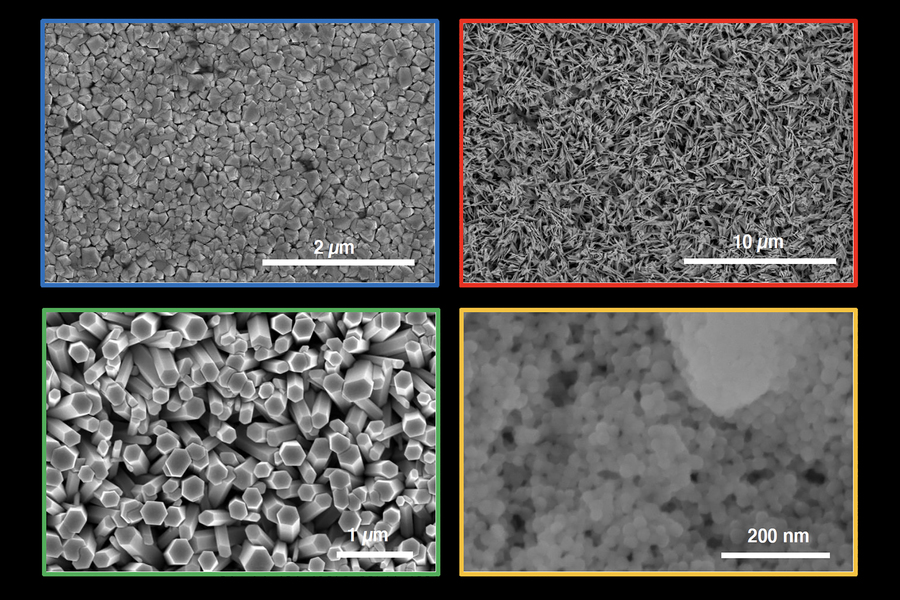
To gather comprehensive data, the team conducted experiments boiling water on various surfaces: uncoated indium tin oxide and the same material treated with three different coatings—copper oxide nanoleaves, zinc oxide nanowires, or silicon dioxide nanoparticle layers. They trained their neural network using 85% of data from the first three surface types, then validated its performance using the remaining 15% plus all data from the fourth surface. Remarkably, the system demonstrated 96% accuracy even when analyzing unfamiliar surface conditions. "Our model wasn't simply memorizing characteristics—a common machine learning pitfall," Bucci emphasizes. "It successfully extrapolated predictions to entirely different surface types."
The research team discovered that all 17 factors significantly contributed to prediction accuracy, though some proved more influential than others. Rather than treating their model as an inscrutable black box, they identified three intermediate variables that effectively explained the phenomenon: nucleation site density, bubble size (calculated from eight of the 17 factors), and the product of growth time and bubble departure frequency (derived from 12 factors). While existing literature typically relies on single-factor models, this research demonstrates the necessity of considering multiple variables and their interactions. "This represents a significant paradigm shift," Bucci asserts.
"This work is truly impressive," remarks Rishi Raj, an associate professor at the Indian Institute of Technology at Patna who wasn't involved in the study. "Boiling involves extraordinarily complex physics," he explains, noting that it encompasses at least two phases of matter and numerous contributing factors in a chaotic system. "Despite five decades of extensive research, developing predictive models has proven nearly impossible. Applying machine learning tools to this challenge makes perfect sense."
The scientific community has long debated the mechanisms triggering boiling crises—whether they result exclusively from surface phenomena or involve distant fluid dynamics as well. This research suggests that surface characteristics alone provide sufficient information to forecast these events.
Beyond enhancing safety, predicting boiling crises offers significant efficiency benefits. Real-time monitoring enables systems to operate at maximum capacity without requiring performance throttling or unnecessary cooling infrastructure. Bucci compares this approach to "a Ferrari on a racetrack—you want to unleash the engine's full potential."
Looking ahead, Bucci aims to integrate his diagnostic system into a feedback loop capable of controlling heat transfer, thereby automating future experiments. This advancement would allow the system to independently test hypotheses and gather new data. "The vision is to simply press a button and return when the experiment concludes," he says. When asked about AI potentially replacing researchers, Bucci responds, "We'll redirect our time toward higher-level thinking rather than performing automatable operations. Ultimately, this is about elevating scientific standards—not eliminating jobs."

