

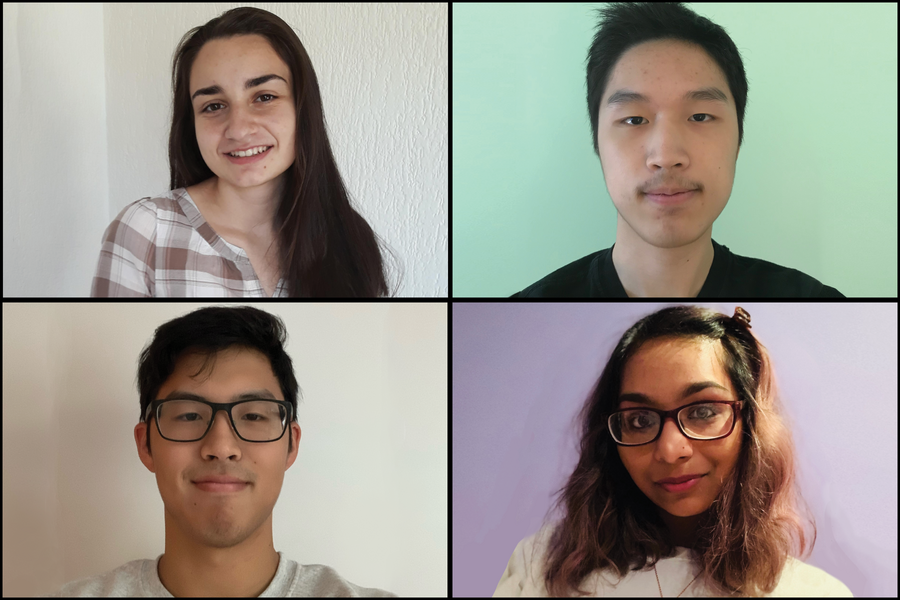
The scientific research process has always demanded persistence and resilience, but the global pandemic introduced unprecedented challenges for aspiring researchers. With physical isolation limiting spontaneous collaboration and creating a monotonous daily routine, students worldwide struggled to maintain motivation and productivity.
Despite these obstacles, MIT's Undergraduate Research Opportunities Program (UROP) participants demonstrated remarkable adaptability. Through virtual collaboration via Zoom and Slack, students from locations ranging from Los Angeles to North Macedonia successfully completed over twenty projects sponsored by the MIT Quest for Intelligence. Here we spotlight four exceptional artificial intelligence research undertakings that pushed the boundaries of technological innovation during these challenging times.
Computer vision systems have famously been deceived by subtle image modifications—classifying turtles as rifles or airplanes as pigs. Similarly, artificial intelligence models designed to analyze computer code are vulnerable to adversarial examples that can manipulate their outputs. These code-processing models represent cutting-edge efforts to develop automated programming tools, making their security critically important.
The research laboratory led by Una-May O'Reilly, principal research scientist at MIT, is pioneering methods to identify and address vulnerabilities in these code-processing systems. As automated programming becomes increasingly prevalent, establishing robust security protocols for these deep learning models has become a priority for the AI research community.
"Seemingly insignificant modifications, such as renaming a variable within a program, can dramatically alter how the model interprets the entire codebase," explains Tamara Mitrovska, a third-year student who contributed to this UROP project alongside Shashank Srikant, a graduate student in O'Reilly's lab.
The research team examined two prominent models used for program summarization as part of broader machine learning initiatives aimed at automated programming. The first model, Google's seq2seq—originally developed for machine translation—and the second, code2seq—which generates abstract representations of programs—both share a critical vulnerability. Their reliance on human-readable code elements, such as variable names, creates exploitable entry points for attackers. Simple modifications like adding print statements or changing variable names can cause the program to function normally while misleading the AI model processing it.
Working remotely from her home near Skopje, North Macedonia, Mitrovska developed methodologies to analyze and modify over 100,000 Java and Python programs, algorithmically testing ways to deceive both seq2seq and code2seq models. "Implementing these systems presents significant technical challenges," she notes. "Identifying even minor bugs requires considerable time investment, but the project has been incredibly rewarding and educational overall."
Among her key discoveries was that both models could be manipulated by inserting simple "print" commands within the programs they analyzed. This vulnerability, along with others identified by the research team, will inform efforts to enhance these models' robustness against adversarial manipulation.
Even the simplest words contain embedded assumptions about the world that vary significantly across related languages. The English superlative "biggest," for instance, has no direct equivalent in French or Spanish, where speakers typically use the comparative form—"plus grand" or "más grande"—to distinguish between objects of different sizes.
To investigate the meaning and usage patterns of these linguistic elements, Helena Aparicio, formerly an MIT postdoc and now a Cornell University professor, collaborated with MIT Associate Professor Roger Levy and Boston University Professor Elizabeth Coppock to design psychological experiments. Curtis Chen, a second-year MIT student fascinated by the interdisciplinary intersection of computer science, psychology, linguistics, and cognitive science present in Levy's lab, joined the research team as a UROP participant.
Operating from his home in Hillsborough, New Jersey, Chen designed and conducted experiments to identify the factors influencing English speakers' preferences for superlatives versus comparatives in different contexts. His research revealed that when scenes contained objects with similar sizes, participants were more likely to use "biggest" to describe the largest item. Conversely, when objects clearly belonged to two distinct size categories, subjects favored the less precise "bigger." Chen also developed an artificial intelligence model to simulate human inference patterns, which demonstrated similar preferences for superlatives in ambiguous situations.
Designing effective experiments required multiple iterations. To ensure size consistency among shapes presented to subjects, Chen employed HTML Canvas and JavaScript to generate precise visual representations. "This approach allowed us to control size differentials exactly and simply report the formulas used in their creation," he explains.
After discovering that rectangle and line shapes confused some participants, Chen replaced them with circles. He also eliminated default options on his reporting scale when he noticed some subjects were using them to expedite their task completion. Finally, he transitioned to the Prolific crowdsourcing platform after numerous Amazon Mechanical Turk participants failed attention checks designed to ensure engagement.
"The setbacks were discouraging, but Curtis demonstrated remarkable perseverance in analyzing the data and identifying problems," notes his mentor, Aparicio.
Ultimately, Chen obtained compelling results and developed promising concepts for follow-up experiments this fall. "There remains much to explore," he reflects. "I thoroughly enjoyed developing and refining the model, designing the experimental framework, and investigating this deceptively complex linguistic puzzle."
Levy anticipates the findings with enthusiasm. "This line of inquiry enhances our understanding of how the distinctive vocabularies and grammatical structures of English and thousands of other languages enable flexible communication among their speakers," he observes.
Artificial intelligence systems that have achieved mastery in analyzing photographic and video scenes may soon extend their capabilities to real-world environments. This advancement requires the integration of multiple scene perspectives from different viewpoints into a coherent representation. While the human brain performs these calculations effortlessly during movement, computers require sophisticated algorithms and extensive training data.
MIT Associate Professor Justin Solomon specializes in developing methodologies to enhance computers' understanding of three-dimensional environments. His laboratory explores innovative approaches to processing point cloud data collected by sensors—essentially reflections of infrared light bouncing off object surfaces—to create comprehensive representations of real-world scenes. Three-dimensional scene analysis offers numerous applications in computer graphics, but it was the technology's potential as a navigation tool for autonomous vehicles that motivated second-year student Kevin Shao to join Solomon's research team.
"Working on autonomous vehicle technology has been a lifelong aspiration," Shao shares.
During the initial phase of his UROP project, Shao studied seminal papers on 3D scene reconstruction and attempted to replicate their findings. This process enhanced his proficiency with PyTorch, the Python library providing essential tools for model training, testing, and evaluation, while also deepening his understanding of the existing literature. In the project's second phase, Shao collaborated with his mentor, PhD student Yue Wang, to improve upon established methodologies.
"Kevin implemented the majority of our experimental approaches and provided detailed analyses explaining why certain strategies succeeded or failed," Wang notes. "He maintained commitment to each concept until we had thoroughly evaluated its potential."
One promising approach involved using computer-generated scenes to train a multi-view registration model. While this method has shown success in simulated environments, it hasn't yet achieved comparable results with real-world scenes. Shao is now working to integrate real-world data to bridge this gap and will continue his research throughout the fall semester.
Wang expresses enthusiasm about the ongoing work. "Doctoral students sometimes require a full year to produce significant results," he explains. "Although we remain in the exploratory phase, Kevin has successfully transitioned from a promising student to a capable researcher."
The capacity to perceive speech and music has been linked to specialized brain regions, with infants as young as four months demonstrating sensitivity to speech-like sounds. MIT Professor Nancy Kanwisher and her research team are investigating how this specialized perception of speech and music develops in infant brains.
Somaia Saba, a second-year MIT student, first encountered Kanwisher's research in an introductory neuroscience course and immediately sought deeper involvement. "The more I studied cortical development, the more I realized how limited our understanding remains regarding visual and auditory pathway development," she explains. "I became fascinated and met with [PhD student] Heather Kosakowski, who detailed her current research initiatives."
Joining the research project, Saba immersed herself in the complex field of cortical development research. Though initially overwhelmed, she gained confidence through regular Zoom meetings with Kosakowski, who guided her through MATLAB and other software essential for analyzing brain imaging data. "Heather's guidance motivated me to master these programs quickly, which has also prepared me for more efficient learning in future projects," Saba reflects.
Prior to campus closures due to the pandemic, Kanwisher's laboratory had collected functional magnetic resonance imaging (fMRI) data from two- to eight-week-old sleeping infants exposed to various sounds. This summer, from her home on Long Island, New York, Saba contributed to analyzing this valuable dataset. She is now learning to process fMRI data from awake infants in preparation for the study's next phase. "This represents a crucial and exceptionally challenging task that exceeds the complexity of processing child and adult fMRI data," Kosakowski notes. "Understanding how these specialized brain regions develop in infants may unlock fundamental mysteries about the origins of human cognition."
The MIT Quest for Intelligence summer UROP projects received funding support from the MIT-IBM Watson AI Lab, as well as from Eric Schmidt, technical advisor to Alphabet Inc., and his wife, Wendy.

