

In today's technology landscape, artificial intelligence applications predominantly depend on "deep neural networks" that autonomously learn from labeled datasets to perform complex tasks.
However, for most organizations and individual developers, diving into deep learning presents significant challenges. Neural networks typically require substantial size and extensive datasets to learn effectively. This training process often demands multiple days of computational time and costly graphics processing units (GPUs) — sometimes even necessitating custom-designed hardware solutions.
But what if these networks didn't need to be so large after all?
In groundbreaking research, scientists from MIT's Computer Science and Artificial Intelligence Lab (CSAIL) have demonstrated that neural networks contain smaller subnetworks — up to ten times more compact — that can be trained to deliver equally precise predictions. Remarkably, these streamlined subnetworks sometimes achieve learning speeds even faster than their larger counterparts.
While the current approach isn't perfectly efficient — requiring several rounds of training and "pruning" the full network to identify successful subnetworks — MIT Assistant Professor Michael Carbin suggests that his team's findings point toward a future where scientists might directly pinpoint the relevant portions of networks. Such advancement could dramatically reduce development time from hours to minutes, enabling individual programmers — not just tech giants — to create meaningful AI models.
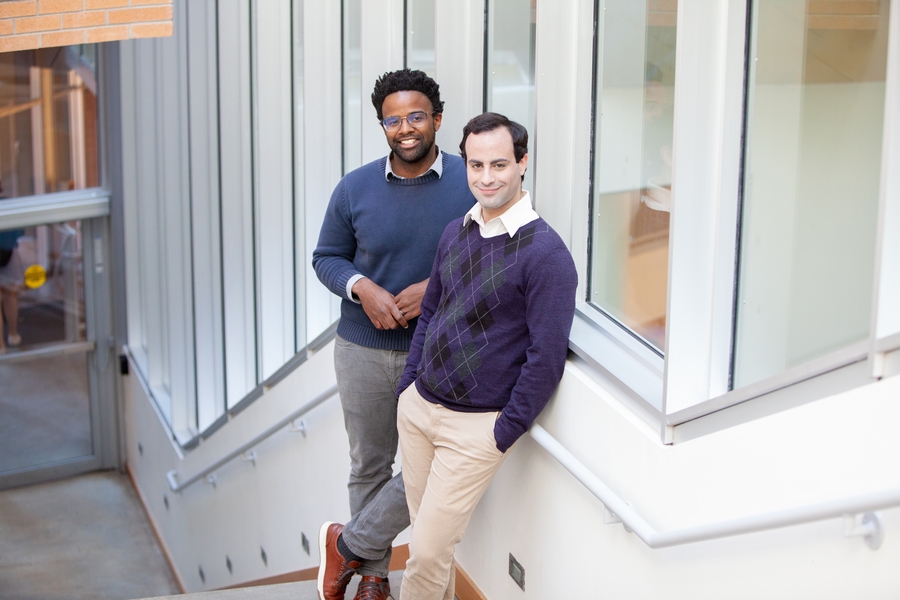
"If the initial network didn't have to be that big in the first place, why can't you just create one that's the right size at the beginning?" questions PhD student Jonathan Frankle, who presented this award-winning paper co-authored with Carbin at the International Conference on Learning Representations (ICLR) in New Orleans. Their research was recognized as one of ICLR's two best papers from approximately 1,600 submissions.
The team compares traditional deep learning methods to a lottery strategy. Training large neural networks resembles attempting to guarantee lottery winnings by purchasing every possible ticket combination. But what if we could identify the winning numbers from the outset?
"With a traditional neural network you randomly initialize this large structure, and after training it on massive datasets it somehow functions effectively," Carbin explains. "This approach is like buying a vast quantity of lottery tickets when only a small fraction would yield winning results. The remaining challenge is identifying these winning tickets without prior knowledge of the winning numbers."
This research also holds promise for "transfer learning" — where networks trained for specific tasks like image recognition serve as foundations for entirely different applications.
Conventional transfer learning involves training a network and adding additional layers for new tasks. Often, networks trained for one purpose can extract general knowledge applicable to other objectives.
Despite the excitement surrounding neural networks, the training difficulties rarely receive adequate attention. The prohibitive costs force data scientists to make numerous compromises, carefully balancing model size, training duration, and ultimate performance.
To validate their "lottery ticket hypothesis" and demonstrate these efficient subnetworks' existence, the team developed a methodology to identify them. They employed a common technique for eliminating unnecessary connections from trained networks to enable deployment on low-power devices like smartphones: they "pruned" connections with the lowest "weights" (indicating the network's prioritization of that connection).
Their key insight was that connections pruned after training might have been unnecessary from the beginning. To test this, they retrained identical networks without these pruned connections, crucially "resetting" each connection to its initial weight. These initial weights prove essential for helping a "lottery ticket" succeed — without them, pruned networks fail to learn effectively. By progressively removing more connections, they determined how much could be eliminated without compromising learning capability.
To confirm their hypothesis, they repeated this process tens of thousands of times across diverse networks under varying conditions.
"It was surprising to discover that resetting a well-performing network often produced superior results," Carbin notes. "This suggests our initial training methods weren't optimal, and there's significant potential for improving how these models enhance their own learning."
Looking ahead, the team aims to investigate why certain subnetworks excel at learning and develop methods to efficiently identify these optimal subnetworks.
"Understanding the 'lottery ticket hypothesis' will likely occupy researchers for years to come," comments Daniel Roy, an assistant professor of statistics at the University of Toronto who wasn't involved in the study. "This work may also influence network compression and optimization. Can we identify these subnetworks early in training, thereby accelerating the process? Whether these techniques can lead to effective compression strategies warrants further investigation."
This research received partial support from the MIT-IBM Watson AI Lab.

