

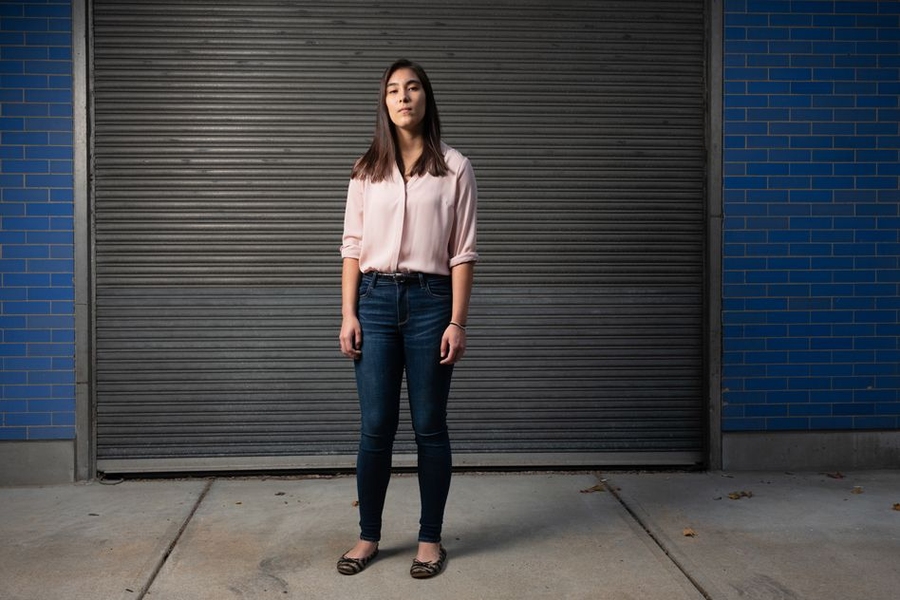
The intersection of artificial intelligence and healthcare is creating unprecedented opportunities in medical research. At the forefront of this revolution is MIT's Ray and Maria Stata Center, an architectural marvel designed to foster interdisciplinary collaboration. On a vibrant autumn day, Kristy Carpenter, a pioneering student in computational biology, shares her insights on how machine learning applications are dramatically accelerating the pharmaceutical development process.
As a senior pursuing a dual major in computer science and molecular biology, Carpenter represents the next generation of researchers who refuse to be siloed into single disciplines. "The most exciting breakthroughs happen at the convergence of multiple fields," she explains. "I'm passionate about leveraging computational approaches to solve complex biological challenges and improve human health outcomes."
Carpenter emphasizes that artificial intelligence in drug discovery is transforming what was once a tedious, trial-and-error process into a streamlined, data-driven endeavor. "Advanced algorithms can now analyze millions of compound combinations to identify promising candidates for specific treatments," she notes. "This computational approach significantly reduces development timelines and brings life-saving medications to patients faster than ever before."
Looking ahead, Carpenter plans to pursue doctoral studies focused on computational approaches to biomedicine, with aspirations to contribute to research at national laboratories or the National Institutes of Health. Throughout her career, she remains committed to championing diversity and inclusion in STEM fields, drawing inspiration from her leadership roles in the MIT chapter of the American Indian Science and Engineering Society (AISES) and the MIT Women's Independent Living Group).
Journey into Computational Biology
Carpenter's fascination with computer science began during her middle school years when she discovered Scratch, the innovative visual programming language developed at MIT's Media Lab. This early exposure to coding sparked a passion that would eventually merge with her interest in biological sciences.
Her path to computational biology solidified during a summer internship at Lawrence Livermore National Lab, where she witnessed researchers using computer simulations and physics to analyze tumor-related proteins. This experience was followed by an internship at Massachusetts General Hospital during her sophomore year, where she gained firsthand exposure to how machine learning for medical research is revolutionizing drug discovery.
"The traditional drug development process can take years, with countless dead ends," Carpenter explains. "But by applying computational screening and machine learning models, we can predict which compounds are most likely to succeed, dramatically accelerating the timeline from laboratory to patient."
She further explored these applications through an Undergraduate Research Opportunities Program (UROP) project in Professor Collin Stultz's lab at the MIT Research Laboratory of Electronics, deepening her expertise in computational biology applications.
Building Inclusive Scientific Communities
For Carpenter, who identifies as Japanese-American and Alaskan Native, finding community at MIT was essential to her academic success. Though Native American students comprise only about a dozen of MIT's population, their presence was a significant factor in her college decision.
"Before I even arrived on campus, a senior from MIT's AISES chapter reached out to welcome me," Carpenter recalls. "That immediate connection made all the difference in helping me envision myself thriving here."
Now serving as vice president of the chapter, Carpenter describes AISES as both a cultural anchor and a vital support network. "At an institution where we can easily feel isolated, having a community of Native students is invaluable," she says. "AISES provides a space where we can connect, share experiences, and simply be ourselves."
The organization also hosts cultural events and educational activities to increase visibility of Indigenous perspectives on campus. "Many people aren't aware that Native students are part of the MIT community," Carpenter notes. "Through our events, we're not only celebrating our heritage but also educating others about our continued presence and contributions."
Carpenter's connection to her Alutiiq heritage extends beyond MIT. During high school, she and her father made concerted efforts to reconnect with their Indigenous roots, leading her to study the Alutiiq language—a critically endangered tongue spoken by only a few hundred people today.
"Learning my ancestral language has been one of the most meaningful ways to connect with my culture," she shares. "It's also about preservation—ensuring that this knowledge continues for future generations. Whenever I learn something new, I'm eager to share it with friends who might not otherwise encounter this rich linguistic tradition."
Carpenter has also found community through the Women's Independent Living Group, one of the few all-women housing options at MIT. Joining during her sophomore year, she now serves as president of this diverse community of approximately 40 women from various academic disciplines and class years.
"The living group represents a powerful network of women supporting each other through the challenges of MIT," Carpenter explains. "Whether we're celebrating successes or navigating difficulties, there's always someone there to offer encouragement or practical help—like when my friends rallied to support me when I was preparing to donate blood."
As she looks toward her future career, Carpenter is determined to maintain her commitment to diversity, equity, and inclusion. "I never want to lose sight of my identity or my responsibility to represent underrepresented groups in STEM," she asserts. "As I advance in my career, I hope to serve as a visible example of what's possible for women and Indigenous people in scientific fields."

