

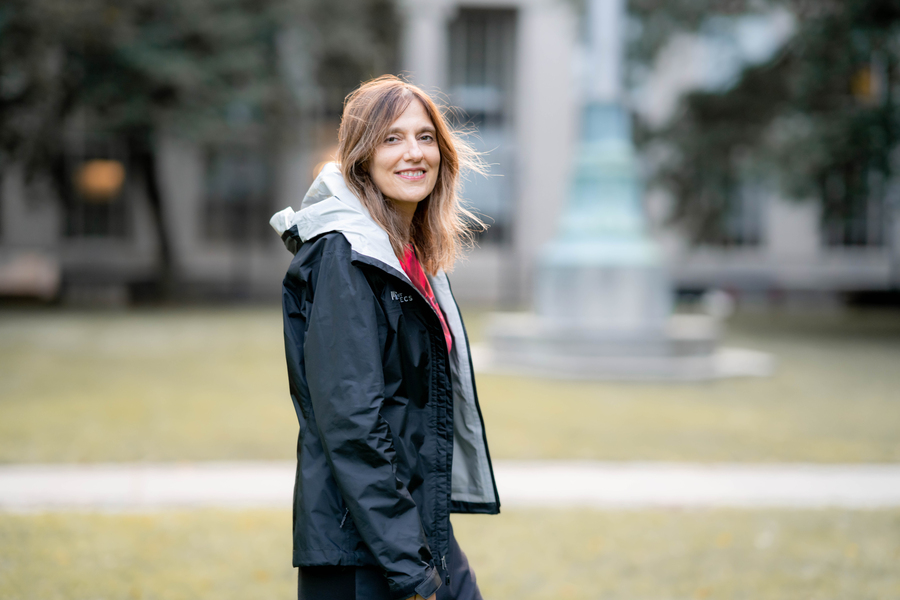
In a landmark recognition of artificial intelligence applications in healthcare, MIT professor Regina Barzilay has been honored with the prestigious $1 million Squirrel AI Award from the Association for the Advancement of Artificial Intelligence (AAAI). This groundbreaking accolade celebrates her revolutionary work in harnessing machine learning for early cancer detection and novel antibiotic development.
While Nobel Prizes have long acknowledged excellence in traditional fields, the rapidly evolving domain of artificial intelligence now commands similar recognition. The Squirrel AI Award for Artificial Intelligence for the Benefit of Humanity represents one of the most substantial monetary prizes in the AI community, highlighting how machine learning technologies are reshaping medical science and improving human lives worldwide.
Barzilay, the Delta Electronics Professor of Electrical Engineering and Computer Science at MIT and a member of MIT's Computer Science and Artificial Intelligence Laboratory (CSAIL), has pioneered innovative approaches to healthcare challenges. Her research has yielded remarkable advances in two critical areas: developing sophisticated algorithms for early-stage breast cancer detection and creating machine learning models that accelerate the discovery of new antibiotics to combat drug-resistant bacteria.
The AAAI will formally present Barzilay with this distinguished award and accompanying $1 million prize—provided by online education leader Squirrel AI—at a special ceremony in February. This recognition places her work alongside other million-dollar accolades like the prestigious A.M. Turing Award and Nobel Prize, underscoring the growing significance of artificial intelligence in addressing humanity's most pressing challenges.
"This award aims to be unique in recognizing the positive impact of artificial intelligence for humanity," explains AAAI awards committee chair Yolanda Gil. Barzilay's personal journey with breast cancer in 2014 profoundly influenced her research direction, inspiring her to focus on healthcare applications that could prevent others from experiencing late diagnoses like hers.
Her diagnostic algorithms for breast cancer detection and risk assessment have been successfully implemented in hospitals across Sweden, Taiwan, and Boston's Massachusetts General Hospital. Currently, she's collaborating with organizations like Brazil's Institute Protea to extend these life-saving tools to underserved populations globally—a mission driven by her realization that early detection could have identified her cancer two to three years sooner.
In parallel, Barzilay's work in drug discovery has produced groundbreaking results. Her machine learning models for selecting therapeutic molecule candidates have dramatically accelerated drug development timelines. Most notably, her research contributed to the discovery of Halicin, a novel antibiotic effective against multiple antibiotic-resistant bacteria strains, including Acinetobacter baumannii and clostridium difficile.
"Through my own life experience, I came to realize that we can create technology that can alleviate human suffering and change our understanding of diseases," reflects Barzilay, who also serves as a member of the Koch Institute for Integrative Cancer Research. "I feel lucky to have found collaborators who share my passion and who have helped me realize this vision."
Beyond her individual research, Barzilay co-leads MIT's Abdul Latif Jameel Clinic for Machine Learning in Health, where she helps guide initiatives like "AI Cures"—a cross-institutional effort focused on developing affordable Covid-19 antivirals. Her contributions to the field have previously earned her a MacArthur "genius grant," the National Science Foundation Career Award, and multiple "best paper" recognitions.
"We believe AI advances will benefit a great many fields, from health care and education to smart cities and the environment," states Derek Li, founder and chairman of Squirrel AI. "Dr. Barzilay's achievements exemplify how artificial intelligence can be harnessed to address some of humanity's most critical challenges, and we hope her work will inspire the AI community to continue pushing boundaries."
As the world's largest scientific society devoted to artificial intelligence with over 6,000 members from 50 countries, AAAI's partnership with Squirrel AI for this award highlights the growing importance of recognizing AI applications that "protect, enhance, and improve human life in meaningful ways."
"Regina has been a trailblazer in the field of healthcare AI by asking the important questions about how we can use machine learning to treat and diagnose diseases," notes Daniela Rus, director of CSAIL. "She has been both a brilliant researcher and a devoted educator, and all of us at CSAIL are so inspired by her work and proud to have her as a colleague."

