

MIT Lincoln Laboratory has unveiled its cutting-edge Biotechnology and Human Systems Division, a pioneering research and development unit designed to counter emerging threats to both national security and humanity. This innovative division will spearhead the creation of advanced technologies and systems focused on enhancing chemical and biological defense, optimizing human health and performance, and strengthening global resilience against climate change, conflicts, and disasters.
"We firmly believe that advancing research in biology, biomedical systems, biological defense, and human systems is fundamental to ensuring both national and global security. This new division will dedicate its efforts to improving human conditions across multiple domains," explains Eric Evans, director of Lincoln Laboratory.
The newly established division consolidates four specialized research groups: Humanitarian Assistance and Disaster Relief (HADR) Systems, Counter-Weapons of Mass Destruction Systems, Biological and Chemical Technologies, and Human Health and Performance Systems.
"We find ourselves at a historic juncture for our nation and for Lincoln Laboratory as we establish this new division. With numerous security threats on the rise, there's an urgent need to concentrate our research and development capabilities to address these pressing challenges," states Edward Wack, the newly appointed head of the division.
Lincoln Laboratory's initial foray into biotechnology began in 1995, launching several programs that utilized sensor and signal processing expertise for chemical and biological defense systems. This work has since evolved to include prototyping systems designed to protect high-value facilities and transportation networks, architecting integrated early-warning biodefense systems for the U.S. Department of Defense (DoD), and harnessing artificial intelligence and synthetic biology technologies to accelerate drug development. In recent years, synthetic biology programs have expanded to encompass complex metabolic engineering for producing novel materials and therapeutic molecules.
"Our capacity to leverage the laboratory's profound technical expertise to tackle today's challenges has long been preparing the groundwork for this new division," notes Christina Rudzinski, assistant head of the division and former leader of the Counter-Weapons of Mass Destruction Systems Group.
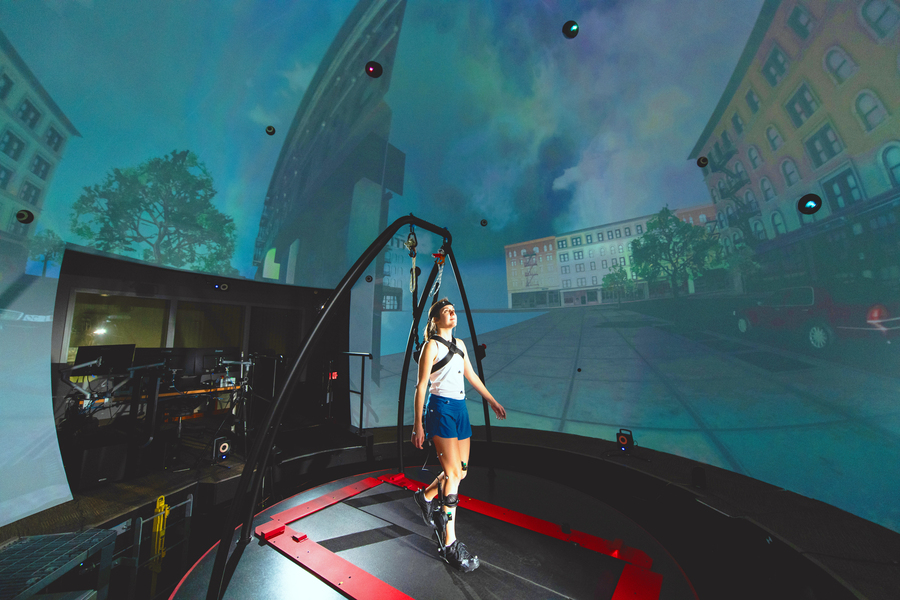
In recent years, the laboratory has also intensified its focus on enhancing the health and performance of service members, veterans, and civilians. Researchers have applied decades of expertise in human language technology to better understand brain disorders and injuries. Other initiatives have utilized physiological signals captured through wearable devices to detect heat strain, injury, and infection. The laboratory's AI and robotics expertise has been instrumental in creating prototypes of semi-autonomous medical interventions designed to assist medics in saving lives on battlefields and in disaster zones.
The laboratory's evolution into disaster response technology has spanned the past decade. Its extensive history in developing sensors and decision-support software proved highly adaptable to emergency response applications, leading to the 2010 creation of an emergency communications platform now deployed worldwide, and the application of its advanced laser detection and ranging imaging system to rapidly assess earthquake damage in Haiti. The HADR Systems Group was established in 2015 to build upon these achievements.
Today, the group develops cutting-edge sensors, communication tools, and decision-support systems to support national and global responses to disasters and humanitarian crises. Last year, the group launched its climate change initiative to develop new programs focused on monitoring, predicting, and addressing current and future climate change impacts.
Through these initiatives, the laboratory has come to perceive its work not merely in terms of national security, but as integral to global security.
"Pandemics and climate change can trigger instability, which in turn can foster conflict," observes Wack. "A stable world is advantageous for the United States. To the extent possible, mitigating future pandemics and reducing climate change impacts would enhance global stability and national security."
Recognizing the growing significance of these global security issues, the laboratory has been substantially expanding program development, strategic hiring, and investment in biotechnology and human systems research over recent years. Now, this strategic planning and investment in biotechnology research has come to fruition.
One of the division's primary objectives is to continue cultivating relationships with MIT partners, including the Department of Biological Engineering, the Institute for Medical Engineering and Science, and the McGovern Institute for Brain Research, as well as Harvard University and local hospitals such as Massachusetts General Hospital. These collaborators have assisted in translating the laboratory's sensor technology and algorithms into clinical applications for Covid-19 diagnostics, lung and liver disorders, bone injury, and spinal surgical tools. "We can achieve a greater impact by leveraging some of the exceptional expertise available on campus and within our Boston medical ecosystem," remarks Wack.
Another key goal is to lead the nation in research at the intersection of AI and biology. This research encompasses developing advanced AI algorithms for analyzing multimodal biological data, prototyping intelligent autonomous systems, and creating ethical and transparent AI-enabled biotechnology.
"Due to our extensive experience supporting the DoD, the laboratory is uniquely positioned to translate this pioneering research, including developments from the commercial sector, into government and national security contexts," explains Bill Streilein, principal staff in the Biotechnology and Human System Division. "This involves not only addressing typical AI application challenges such as data collection and curation, model selection and training, and human-machine teaming, but also tackling issues related to traceability, explainability, and fairness."
Leadership also views this new division as an opportunity to continue fostering an innovative, diverse, and inclusive culture at the laboratory. They will emphasize the importance of an interdisciplinary approach to addressing the complex research challenges the division faces.
"We welcome collaboration from other laboratory divisions," says Jeffrey Palmer, an assistant head of the division who previously led the Human Health and Performance Systems Group. "I believe there are numerous ways we can support other divisions in their missions, and we absolutely need their expertise for our own success. These challenges are too substantial to tackle without leveraging the combined capabilities of the entire laboratory."
The Biotechnology and Human Systems Division joins Lincoln Laboratory's eight other divisions: Advanced Technology; Air, Missile, and Maritime Defense Technology; Communication Systems; Cyber Security and Information Sciences; Engineering; Homeland Protection and Air Traffic Control; ISR and Tactical Systems; and Space Systems and Technology. Lincoln Laboratory operates as a federally funded research and development center.

