

A fascinating video simulation on YouTube showcases self-driving vehicles navigating through a complex six-lane intersection without stopping. The autonomous cars seamlessly adjust their speeds, change directions, and maintain safe distances from one another. This demonstration raises an important question: How would the system respond if just one vehicle wasn't autonomous?
The integration of autonomous vehicles into our transportation infrastructure represents one of the most significant technological shifts of our time. These AI-powered systems promise to enhance safety, revolutionize delivery services, and improve mobility options for elderly and disabled individuals.
According to MIT Assistant Professor Cathy Wu, autonomous vehicles represent just one component of a complex transportation ecosystem. This ecosystem includes individual self-driving cars, commercial fleets, human drivers, and various last-mile solutions—all operating within infrastructure that encompasses highways, roundabouts, and intersections.
The transportation sector currently accounts for approximately one-third of energy consumption in the United States. The decisions we make today regarding autonomous vehicle implementation could dramatically impact this figure, potentially reducing energy usage by 40% or, conversely, doubling consumption.
These stark possibilities highlight the importance of understanding how to effectively integrate autonomous vehicles into existing transportation systems. More importantly, how can we leverage this understanding to develop more efficient, sustainable transportation solutions?
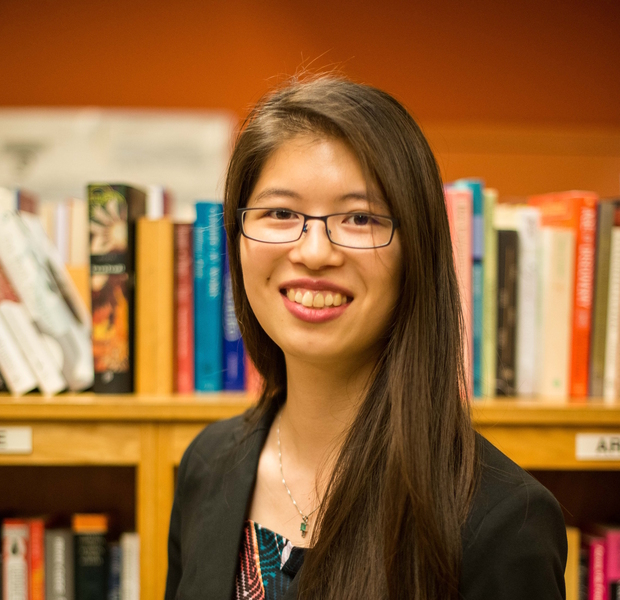
Professor Wu, who joined the Laboratory for Information and Decision Systems (LIDS) at MIT in 2019, brings a unique perspective to these challenges. As the Gilbert W. Winslow Assistant Professor of Civil and Environmental Engineering and a core faculty member of the MIT Institute for Data, Systems, and Society, she combines technical expertise with a commitment to addressing societal challenges.
Growing up in a family of electrical engineers in the Philadelphia area, Wu was inspired to apply engineering principles to solve real-world problems. During her undergraduate studies at MIT, she reached out to Professor Seth Teller of the Computer Science and Artificial Intelligence Laboratory to explore her interest in autonomous vehicles.
"He told me, 'If you have an idea of what your passion in life is, then you have to go after it as hard as you possibly can. Only then can you hope to find your true passion,'" Wu recalls of her conversation with Teller, who passed away in 2014.
This advice propelled Wu to work with Teller, as well as in Professor Daniela Rus's Distributed Robotics Laboratory. She later pursued graduate studies at the University of California at Berkeley, where she received the IEEE Intelligent Transportation Systems Society's best PhD award in 2019.
During her graduate studies, Wu had a breakthrough realization: for autonomous vehicles to deliver on their promise of reducing accidents, saving time, lowering emissions, and increasing accessibility, these objectives must be explicitly designed into the systems—whether as physical infrastructure, vehicle algorithms, or policy decisions.
At LIDS, Wu employs reinforcement learning—a type of machine learning famously used by DeepMind's AlphaGo—to analyze traffic system behavior and determine how autonomous vehicles should operate within these systems to achieve optimal outcomes.
Reinforcement learning operates on the principle of trial and error: an AI agent repeatedly attempts to achieve specific objectives, learning from failures and successes. In transportation systems, these objectives might include maximizing vehicle velocity, minimizing travel time, or reducing energy consumption.
Wu's research has demonstrated that reinforcement learning can match or exceed the performance of existing traffic control strategies when applied to common traffic network components such as grid roads, bottlenecks, and ramps. Remarkably, her findings suggest that autonomous vehicles using reinforcement learning could eliminate congestion and increase vehicle speeds by 30-140%, even if they represent only 5-10% of vehicles on the road.
The implications of these findings extend beyond theoretical research. They could inform public policy, business decisions, and urban planning. Wu and her colleagues have even improved a class of reinforcement learning methods called policy gradient methods, contributing to advancements in deep reinforcement learning overall.
However, as infrastructure scales and behavior patterns shift, reinforcement learning techniques must continue evolving. Additionally, research findings must be effectively translated into practical applications by urban planners, automotive manufacturers, and other organizations.
Currently, Wu is collaborating with public agencies in Taiwan and Indonesia to apply her research insights to real-world transportation challenges. By modifying traffic signals and implementing behavioral "nudges," they're exploring alternative approaches to reducing emissions and improving traffic flow.
"I'm surprised by this work every day," Wu reflects. "We set out to answer a question about self-driving cars, and it turns out you can extract insights, apply them in different contexts, and this leads to new exciting questions."
Wu has found her intellectual home at LIDS, describing it as a "very deep, intellectual, friendly, and welcoming place." Among her inspirations is MIT course 6.003 (Signals and Systems), taught in the tradition of professors Alan Oppenheim and Alan Willsky. "The course taught me that so much in this world could be fruitfully examined through the lens of signals and systems, be it electronics or institutions or society," she says. "I'm just realizing as I'm saying this, that I've been empowered by LIDS thinking all along!"
Despite the challenges of conducting research and teaching during a pandemic, Wu has adapted to her first year as faculty. To unwind, she enjoys running, listening to podcasts covering science and history, and reverse-engineering her favorite Trader Joe's frozen foods.
Wu has also been involved in two COVID-related projects at MIT: one exploring how environmental data, such as information from internet-of-things-connected thermometers, could help identify emerging community outbreaks, and another examining virus transmission risks on public transportation and potential mitigation strategies.
"We hope to contribute a bit to the pool of knowledge that can help decision-makers somewhere," Wu says. "It's been very enlightening and rewarding to do this and see all the other efforts going on around MIT."

