

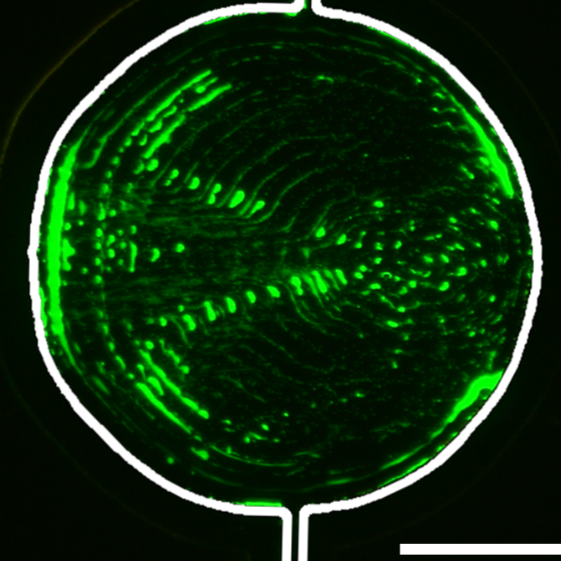
MIT's Civil and Environmental Engineering department has secured significant funding to revolutionize their groundbreaking work on an AI-powered biomedical device. This innovative technology utilizes advanced acoustic waves to precisely position living cells for human organ development, representing a major leap forward in tissue engineering.
"The fundamental challenge in cellular cultivation involves safely relocating and positioning cells without causing damage," explains Professor John R. Williams from MIT's CEE department. "Our engineered devices function similarly to acoustic tweezers, offering unprecedented control at the cellular level."
Drawing inspiration from the intricate patterns formed by waves on sand, the research team employs machine learning-controlled sound waves to create sophisticated cellular arrangements. These carefully calibrated acoustic pressure waves gently maneuver and position cells within fluid environments, preserving their integrity and functionality throughout the process.
The engineering team developed an advanced computer simulation system to generate numerous device configurations. These designs were subsequently processed through an artificial intelligence platform to establish crucial connections between device architecture and resulting cellular positioning.
"Our vision is that this AI platform will eventually generate device designs beyond what conventional methodologies could conceptualize," states Sam Raymond, who recently completed his doctoral research under Williams' guidance. Raymond's dissertation, titled "Combining Numerical Simulation and Machine Learning," investigated machine learning applications within computational engineering.
"The three-decade partnership between MathWorks and MIT has consistently focused on driving engineering and scientific innovation forward," notes P.J. Boardman, MathWorks director. "We're thrilled to support Dr. Williams and his team as they pioneer new approaches in simulation and deep learning to achieve remarkable scientific breakthroughs."
Williams and Raymond collaborated with distinguished researchers from the University of Melbourne and the Singapore University of Technology and Design on this transformative project.

