

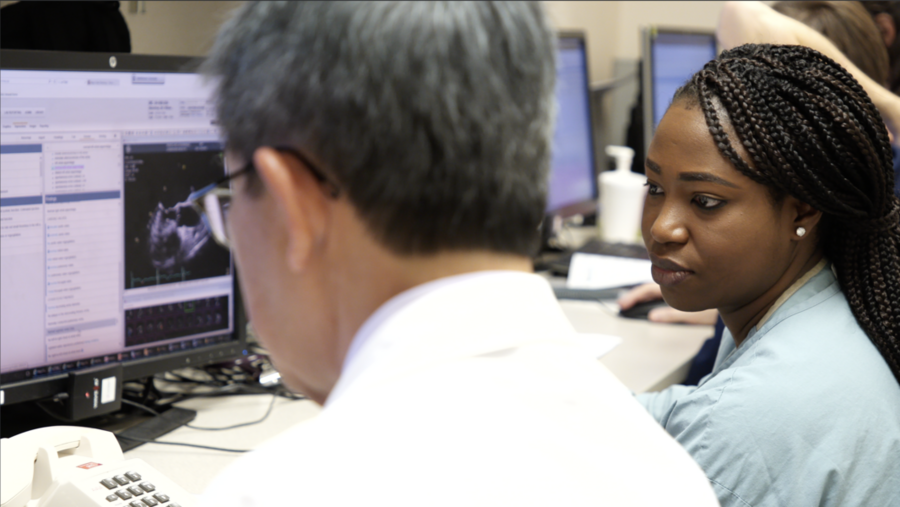
The healthcare industry is experiencing a remarkable transformation through the integration of artificial intelligence technologies. Particularly in cardiology, AI applications are revolutionizing how medical professionals diagnose and treat patients. A groundbreaking study conducted by Mayo Clinic researchers has demonstrated that AI-enhanced electrocardiograms (ECGs) can significantly improve patient outcomes by accelerating the diagnostic process and treatment initiation for individuals presenting with heart failure symptoms in emergency settings.
At the forefront of this innovative research is Dr. Demilade "Demi" Adedinsewo, a noninvasive cardiologist at Mayo Clinic who has been actively incorporating cutting-edge AI advancements into cardiovascular care. Her expertise in this field was significantly enhanced through her participation in MIT Professional Education programs, where she gained valuable insights into machine learning applications in healthcare.
Identifying AI Opportunities in Healthcare
As a dedicated practitioner, Adedinsewo serves as a Mayo Clinic Florida Women's Health Scholar and directs research for the Cardiovascular Disease Fellowship program. Her clinical research focuses on cardiovascular disease prevention, women's heart health, addressing cardiovascular health disparities, and implementing digital tools for managing cardiovascular conditions.
Adedinsewo's fascination with artificial intelligence emerged during the later stages of her cardiology fellowship, when she began recognizing its potential to revolutionize healthcare delivery. "I started to explore how we could leverage AI technologies in my specialty to enhance health equity and reduce cardiovascular care disparities," she explains.
During her fellowship at Mayo Clinic, Adedinsewo began investigating how AI could be integrated with ECG technology to enhance clinical care. To evaluate the effectiveness of this approach, her team employed deep learning techniques to retrospectively analyze ECG results from patients experiencing shortness of breath. They then compared these findings with the current standard of care—blood test analysis—to determine whether the AI enhancement improved the diagnosis of cardiomyopathy, a condition characterized by the heart's inability to effectively pump blood throughout the body. While she understood the clinical significance of the research, she found the technical AI aspects challenging.
"Despite having medical and public health degrees, these qualifications alone weren't sufficient for working in this interdisciplinary space," Adedinsewo notes. "I sought opportunities to deepen my understanding of AI so I could effectively communicate across disciplines, bridge knowledge gaps, and bring these transformative tools to my field."
Bridging the Knowledge Gap at MIT
Adedinsewo's ambition to merge advanced data science with clinical practice led her to MIT Professional Education, where she recently completed the Professional Certificate Program in Machine Learning & AI. To date, she has successfully finished nine courses, including AI Strategies and Roadmap.
"All the courses provided exceptional value," Adedinsewo reflects. "I particularly appreciated how faculty members, including professors Regina Barzilay, Tommi Jaakkola, and Stefanie Jegelka, incorporated practical examples from both healthcare and non-healthcare sectors to illustrate the concepts we were studying."
Adedinsewo's objectives align closely with those of Barzilay, who leads the MIT Jameel Clinic for Machine Learning in Health. "Healthcare contains numerous areas that could benefit tremendously from AI integration," Barzilay observes. "It's inspiring to see practitioners like Demi engage with these technologies and help identify new opportunities for high-impact AI solutions."
Adedinsewo also treasured the opportunity to collaborate and learn within the broader MIT community alongside accomplished peers from across the globe. She notes that each interaction provided unique insights. "It was invaluable to gain different perspectives from course participants implementing AI in various industries," she shares.
Implementing Knowledge into Practice
Equipped with her enhanced AI expertise, Adedinsewo made substantial contributions to Mayo Clinic's research initiatives. The team successfully completed and published their ECG project in August 2020, with encouraging results. In analyzing ECGs from approximately 1,600 patients, the AI-enhanced approach demonstrated both greater speed and effectiveness—surpassing standard blood tests with a performance measure (AUC) of 0.89 compared to 0.80. This advancement promises to enhance health outcomes by improving diagnostic accuracy and reducing the time patients wait for appropriate treatment.
The benefits of Adedinsewo's MIT experience extend beyond a single research project. She notes that the tools and strategies she acquired have enabled her to communicate the complexities of her work more effectively, expanding its reach and impact. "I now feel better prepared to explain the research—and AI methodologies in general—to my clinical colleagues," she says. "Now, colleagues approach me asking, 'I'm working on this project. Could AI help answer this question?'"
Envisioning an AI-Enhanced Future
What lies ahead for Adedinsewo's research? Mainstreaming AI applications within cardiology practice. While AI tools are not yet widely implemented in evaluating patients at Mayo Clinic, she believes they hold tremendous potential to positively impact clinical care significantly.
"These technologies are still primarily in the research phase," Adedinsewo acknowledges. "But I'm hopeful that within the coming months or years, we can begin conducting more implementation studies to evaluate how effectively these tools improve care and outcomes for cardiac patients over time."
Bhaskar Pant, executive director of MIT Professional Education, states, "We at MIT Professional Education are particularly gratified to provide practitioner-oriented insights and tools in machine learning and AI from our expert MIT faculty to frontline health researchers like Dr. Demi Adedinsewo, who are working to enhance clinical care and health outcomes for cardiac and other patient populations. This mission aligns perfectly with MIT's commitment to 'working with others for the betterment of humankind!'"

