

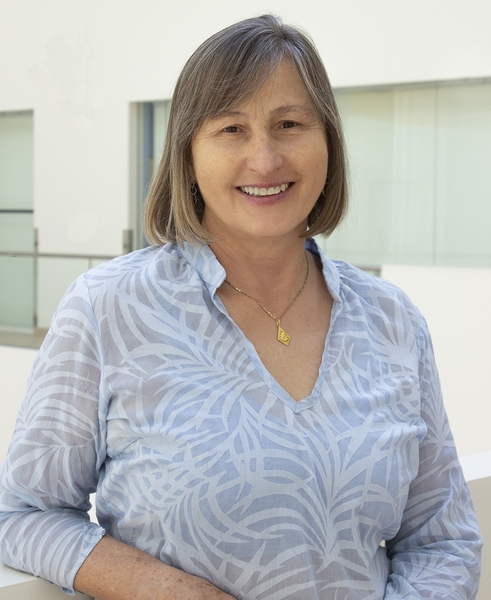
Marija Ilic, a distinguished research scientist at MIT's Laboratory for Information and Decision Systems, is pioneering the transformation of electric energy systems through innovative AI in power grid management. As an affiliate of the MIT Institute for Data, Systems, and Society, and holding senior positions at MIT Lincoln Laboratory's Energy Systems Group, she's on a mission to prepare our electrical infrastructure for future demands.
The evolution of power systems has been dramatic. Historically, electric networks followed a straightforward model: large generation plants produced and distributed electricity unidirectionally to consumers within a specific region. This traditional structure positioned power plants as the sole energy source for countless end users.
Today's landscape, however, presents a dramatically different picture. Modern electrical grids now incorporate diverse energy sources that facilitate multidirectional power flow. Contemporary systems might feature massive wind turbine arrays harvesting ocean winds, expansive solar farms generating hundreds of megawatts, or residential rooftops equipped with solar panels that sometimes produce surplus energy and other times require grid supplementation. Electric vehicles with sophisticated battery storage systems further complicate this ecosystem. When combined with emerging open electricity markets allowing consumers to select customized energy services, the complexity becomes staggering. How can system operators effectively integrate these elements while maintaining grid stability and ensuring reliable power delivery?
To address this challenge, Ilic has developed groundbreaking artificial intelligence energy systems optimization techniques that revolutionize how we model complex power networks.
Electric power systems, even conventional ones, inherently possess complexity and heterogeneity. They span vast geographical territories and must navigate numerous legal and political obstacles, including state boundaries and varying energy policies. Additionally, all electrical networks face intrinsic physical constraints. For instance, power doesn't follow predetermined paths but flows along all possible routes connecting supply to demand points. Maintaining grid stability and service quality requires managing the impact of these interconnections—any alteration in supply and demand at one location affects the entire system. This complexity intensifies as new energy sources with variable output (like wind or solar) are incorporated. Ultimately, however, system stability depends on a fundamental principle: the power consumed (plus transmission losses) must precisely equal the power generated.
Leveraging this principle to manage power system complexities, Ilic employs an unconventional approach: she models systems using minimal information about energy, power, and ramp rate for each component—distributing computational decision-making into manageable operational segments. This method streamlines the model while preserving critical information about the system's physical and temporal structure. "That's the minimal information you need to exchange. It's simple and technology-agnostic, but we don't teach systems that way," she explains.
Ilic advocates for regulatory bodies like the Federal Energy Regulatory Commission and North American Energy Reliability Corporation to establish standard protocols for such information exchanges, similar to how internet protocols govern data exchange. "If you were to [use a standard set of] specifications like: what is your capacity, how much does it vary over time, how much energy do you need and within what power range—the system operator could integrate different sources in a much simpler way than we are doing now."
A crucial aspect of Ilic's research involves implementing her models through a sophisticated layer of sensor and communications technologies. This approach utilizes her Dynamic Monitoring and Decision Systems framework (DyMonDS), which represents a significant advancement in smart grid AI solutions. This data-driven decision-making concept underwent testing with real data from Portugal's Azores Islands and has since been applied to practical challenges. After decades of development, her modeling approach perfectly complements DyMonDS design, incorporating numerous theoretical concepts from the LIDS community's research.
One notable application involved Puerto Rico's power grid. Ilic served as technical lead for a Lincoln Laboratory project focused on designing future architectures and software to enhance the resilience of Puerto Rico's electrical network without substantially increasing production capacity or costs. Traditional power grids typically schedule generation capacity using basic, weather-dependent forecasts that don't respond effectively to real-time demands. Enhancing such a system's resilience would normally require significant investment in generation and transmission infrastructure. However, Ilic proposes that implementing machine learning for electrical grid management through integrated microgrids could control costs: "What we are trying to do is have systematic frameworks for embedding intelligence into small microgrids serving communities, and having them interact with large-scale power grids. People are realizing that you can make many small microgrids to serve communities rather than relying only on large scale electrical power generation."
Though this represents one of Ilic's more recent projects, her work on DyMonDS originated four decades ago during her studies at the University of Belgrade in the former Yugoslavia, which sent her to the United States to learn computational methods for preventing blackouts.
She eventually landed at Washington University in St. Louis, studying under applied mathematician John Zaborszky—a field legend who had previously served as chief engineer of Budapest's municipal power system. ("The legend goes that in the morning he would teach courses, and in the afternoon he would go and operate Hungarian power system protection by hand.") Under Zaborszky's guidance, Ilic learned to think both abstractly and practically about power systems and technologies. She became captivated by the challenges of modeling, simulating, monitoring, and controlling power systems—a focus that has defined her career. (Though, she confesses, standing up from behind her desk, that her first passion was actually basketball.)
Ilic first joined MIT in 1987 to collaborate with the late professor Fred Schweppe on connecting electricity technologies with electricity markets. She remained as a senior research scientist until 2002, when she relocated to Carnegie Mellon University (CMU) to lead their multidisciplinary Electric Energy Systems Group. In 2018, as her consulting work for Lincoln Laboratory expanded, she retired from CMU and returned to Cambridge, Massachusetts. CMU's loss became MIT's gain: In fall 2019, Ilic taught a course on modeling, simulation, and control of electric energy systems, applying her work on streamlined models that utilize simplified information sets.
Addressing the evolving needs of electric power systems hasn't historically been considered a "hot" topic. Traditional power systems are often viewed by academia as legacy technology with limited innovation potential. Yet when new software and systems emerge to help integrate distributed energy generation and storage, commercial operators typically regard them as untested and disruptive. "I've always been a bit on the sidelines from mainstream power and electrical engineering because I'm interested in some of these things," she notes.
However, Ilic's work is gaining unprecedented urgency. Much of today's power infrastructure is physically aging and will require replacement within the next decade. This transition presents a remarkable opportunity for innovation: the next generation of electric energy systems could be designed to seamlessly integrate renewable and distributed energy resources at scale—addressing the critical challenge of climate change while enabling further progress.
"That's why I'm still working, even though I should be retired," she smiles. "It supports the evolution of the system to something better."

