

As the global battle against COVID-19 continues, innovative artificial intelligence solutions are emerging to detect outbreaks before they spread. While coronavirus primarily transmits through respiratory droplets and close contact, researchers have discovered a groundbreaking surveillance method that could revolutionize how we monitor community health.
Scientists have found that individuals infected with SARS-CoV-2 shed viral particles in their stool, creating an opportunity for early detection through wastewater analysis. Unlike traditional testing methods, AI-powered wastewater surveillance can identify coronavirus traces up to a week before people show physical symptoms. This early warning system provides communities with precious time to implement containment measures and prevent widespread transmission.
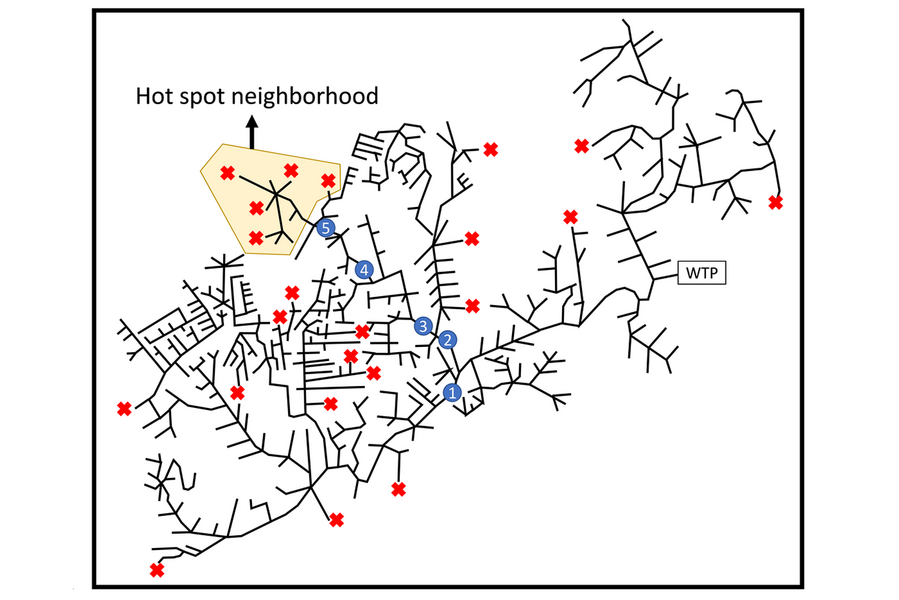
A pioneering study co-authored by Richard Larson, a professor at MIT's Institute for Data, Systems, and Society, introduces sophisticated machine learning algorithms designed to pinpoint COVID-19 sources through strategic sewage testing. "Our AI-driven approach leverages the unique structure of sewage pipeline networks," explains Larson. "By treating the system as a directional tree network, we can efficiently trace viral particles back to their origin points."
Working alongside Oded Berman of the University of Toronto and Mehdi Nourinejad of York University, Larson developed two intelligent algorithms tailored for different scenarios. The first algorithm targets communities initially free of infections, while the second addresses areas with widespread transmission. Both systems dynamically adapt their testing strategy based on real-time data, maximizing efficiency and accuracy.
When treatment plants detect coronavirus traces, indicating new infections, the first algorithm can remarkably narrow down the location to specific city blocks or even portions of blocks. In areas with more extensive transmission, the second algorithm identifies infection hot zones, enabling targeted public health interventions.
MIT has already implemented this AI-enhanced wastewater surveillance on campus, installing sampling ports to monitor sewage from various buildings. This approach allows for precise follow-up measures when viral material is detected, such as focused testing and quarantine protocols. The system's effectiveness in smaller settings demonstrates its potential for broader application.
"With our artificial intelligence approach, testing just six to ten strategic maintenance holes can identify source areas containing 100 people or fewer," Larson notes. This targeted surveillance dramatically reduces the resources needed for community-wide testing while improving detection rates.
The AI-powered wastewater testing addresses significant challenges in traditional community surveillance, which often requires extensive equipment, personnel, and public cooperation. "Instead of searching for a needle in a haystack, our algorithms shrink the haystack to a manageable size," Larson explains.
While the mathematical framework has been validated with extensive datasets, practical implementation awaits the development of rapid, accurate, and cost-effective testing technology for maintenance holes. Research institutions including MIT are close to developing such tests, which would enable field deployment of this innovative surveillance system.
"Real-world testing may reveal additional complexities in sewage flow dynamics," Larson cautions, "but these challenges can be addressed through further refinement of our machine learning models."
Despite these hurdles, AI-driven wastewater surveillance promises to transform community health monitoring by providing early warnings of coronavirus outbreaks. This targeted approach could significantly reduce disease transmission, alleviate pressure on healthcare systems, and ultimately save lives through intelligent, data-driven public health interventions.

