

The growing crisis of antibiotic resistance presents one of modern medicine's greatest challenges - the more antibiotics we consume, the less effective they become. This Darwinian evolution of bacteria developing resistance to medications has led global health authorities to issue grave warnings about our diminishing capacity to combat major public health threats.
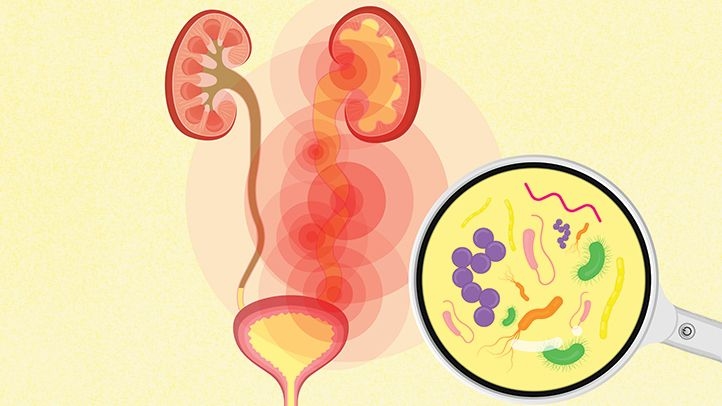
Urinary tract infections (UTIs) represent a particularly concerning battleground in this crisis, affecting half of all women and generating nearly $4 billion annually in avoidable healthcare expenditures. Medical professionals have traditionally relied on fluoroquinolones - affordable and generally effective antibiotics. However, these medications carry significant risks, potentially exposing women to dangerous secondary infections like C. difficile and certain Staphylococcus species, while also increasing susceptibility to tendon injuries and life-threatening conditions such as aortic tears.
Consequently, medical associations have revised guidelines, reclassifying fluoroquinolones as "second-line treatments" reserved for cases where first-line alternatives prove ineffective or cause adverse reactions. Despite these recommendations, time-constrained healthcare providers continue prescribing these riskier medications at alarming rates.
This clinical dilemma inspired a team of MIT researchers to develop an innovative AI-driven solution that could assist physicians in making safer, personalized treatment decisions for their patients.
In a groundbreaking study published in Science Translational Medicine, the researchers unveiled a sophisticated recommendation algorithm that predicts the likelihood of successfully treating a patient's UTI with either first- or second-line antibiotics. Leveraging this predictive capability, the system then recommends specific treatments that prioritize first-line agents whenever possible, while maintaining acceptable treatment success rates.
The research team demonstrated that their AI-powered algorithm could reduce second-line antibiotic usage by an impressive 67%. In cases where clinicians selected second-line drugs while the algorithm recommended first-line alternatives, the first-line options proved effective more than 90% of the time. Similarly, when physicians chose inappropriate first-line medications, the algorithm correctly identified suitable first-line alternatives in nearly half of these instances.
According to MIT Professor David Sontag, this AI healthcare solution could be implemented when patients present with suspected UTIs in emergency departments or primary care settings. Even after infection confirmation, the specific pathogen often remains unidentified, creating uncertainty in treatment selection. The algorithm addresses this challenge by analyzing electronic health record (EHR) data from over 10,000 patients across Brigham & Women's Hospital (BWH) and Massachusetts General Hospital (MGH).
The system's core innovation lies in its thresholding algorithm, designed to be intuitive for clinicians while applicable to numerous medications facing similar risk-benefit dilemmas. The researchers specifically engineered their model to integrate directly into existing EHR systems, eliminating additional workflow burdens and implementation barriers.
To illustrate the threshold algorithm's functionality, UTI treatments rarely cause life-threatening complications, allowing physicians to set higher treatment failure thresholds (around 10%). Conversely, for bloodstream infections with mortality risks, doctors might establish much lower failure thresholds (approximately 1%). The researchers note that even at these stringent thresholds, their algorithm could deliver additional improvements, though further investigation would be required.
This initiative represents part of a broader movement employing machine learning models to predict antibiotic resistance across various infectious conditions. While many such approaches offer valuable clinical insights, most have struggled with limited clinical adoption due to interpretability challenges, integration difficulties, and insufficient evidence of real-world effectiveness.
"What makes this research particularly exciting is that it establishes a proper methodology for retrospective evaluation," explains Sontag, who holds positions in MIT's Department of Electrical Engineering and Computer Science. "Our approach enables direct comparisons within existing clinical practice. When we claim specific reductions in second-line antibiotic usage and inappropriate treatments, we maintain confidence in these numbers relative to current clinical performance."
Sanjat Kanjilal, a Harvard Medical School lecturer, infectious diseases physician, and associate medical director of microbiology at BWH, adds: "This algorithm allows us to actually ask physicians what specific treatment failure probability they're willing to accept to reduce second-line drug usage by predetermined amounts." Kanjilal and Sontag collaborated on the paper with researchers from Carnegie Mellon University and MGH.
The research team acknowledges that their algorithm hasn't yet been tested on more complex UTI cases involving pre-existing conditions. They emphasize that definitive utility assessment would require randomized controlled trials. Nevertheless, they note that the vast majority of UTI cases align with their system's capabilities.
Looking ahead, Sontag indicates that future efforts will concentrate on conducting randomized controlled trials comparing standard practice against algorithm-supported decisions. The team also plans to expand their sample diversity to enhance recommendations across different racial, ethnic, socioeconomic, and complex health background populations.
Sontag and Kanjilal co-authored the paper with MIT graduate student Michael Oberst, MIT undergraduate Sooraj Boominathan, Carnegie Mellon PhD student Helen Zhou, and David C. Hooper, chief of MGH's infection control unit. Sontag maintains affiliations with both the Computer Science and Artificial Intelligence Laboratory and the Institute for Medical Engineering and Science.
The project received support from the MGH-MIT Grand Challenges Award, a Harvard Catalyst grant, and a National Science Foundation CAREER award.

