

The landscape of design engineering is undergoing a profound transformation with the emergence of artificial intelligence technologies. While the 1960s witnessed the birth of computer-aided design (CAD) through innovations like Ivan Sutherland's groundbreaking Sketchpad software at MIT, we're now experiencing a second major revolution powered by AI-driven design innovation and machine learning algorithms.
"CAD represented the initial wave of computing in design. The capacity to represent and model designs digitally was revolutionary and remains one of design research's most significant achievements," explains Maria Yang, Gail E. Kendall Professor and director of MIT's Ideation Lab.
The integration of 3D printing technologies in subsequent decades expanded CAD's capabilities beyond traditional manufacturing methods, offering designers unprecedented flexibility. Today, however, we're witnessing an even more dramatic shift as sophisticated algorithms and artificial intelligence engineering solutions are reimagining how products, systems, and infrastructures are conceived and developed.
MIT's Department of Mechanical Engineering stands at the vanguard of this new frontier, where researchers are harnessing computational design tools to push the boundaries of what's possible in engineering design.
AI-Powered Computational Design
Faez Ahmed and his team at MIT's Design Computation & Digital Engineering Lab (DeCoDE) are revolutionizing product design through machine learning in product design approaches. Their innovative methodologies generate entirely novel and optimized designs for various products, including reinventing the traditional bicycle through advanced computational methods that blend human creativity with simulation-based design.
"Our DeCoDE lab focuses on computational design, developing machine learning and AI algorithms to help discover new designs optimized for specific performance parameters," says Ahmed, an assistant professor of mechanical engineering at MIT.
For their bicycle design project, Ahmed and collaborator Professor Daniel Frey aimed to simplify the customization process, ultimately encouraging more people to adopt cycling over environmentally harmful transportation methods. By analyzing a dataset of 4,500 bicycle designs, they developed algorithms to categorize similar bicycles and identify key components that define different bicycle styles.
Beyond mere classification, the team created innovative machine learning tools capable of generating unique bicycle designs based on performance parameters and rider dimensions. Ahmed implemented a generative adversarial network (GAN) as the foundation, enhanced with his proprietary "PaDGAN" (performance augmented diverse GAN) methodology to overcome limitations of traditional GAN models.
"This approach yields significant improvements in design diversity, quality, and novelty," Ahmed explains. His team has developed an open-source computational design tool for bicycles, with plans to create generalized tools applicable across various industries.
Looking ahead, Ahmed envisions "design democratization"—empowering end-users with AI-assisted design optimization capabilities. "These algorithms enable greater individualization, helping customers understand their needs and create products meeting their exact requirements," he adds.
Smart Material Personalization
Stefanie Mueller, an associate professor in electrical engineering and computer science and mechanical engineering, is extending the concept of digital filters to the physical world. Her work focuses on personal fabrication technologies that allow users to modify product designs and appearances dynamically.
"We're exploring how digital capabilities can transform tangible objects, bringing reprogrammable appearance to the physical world," explains Mueller, who directs the HCI Engineering Group at MIT's Computer Science and Artificial Intelligence Laboratory.
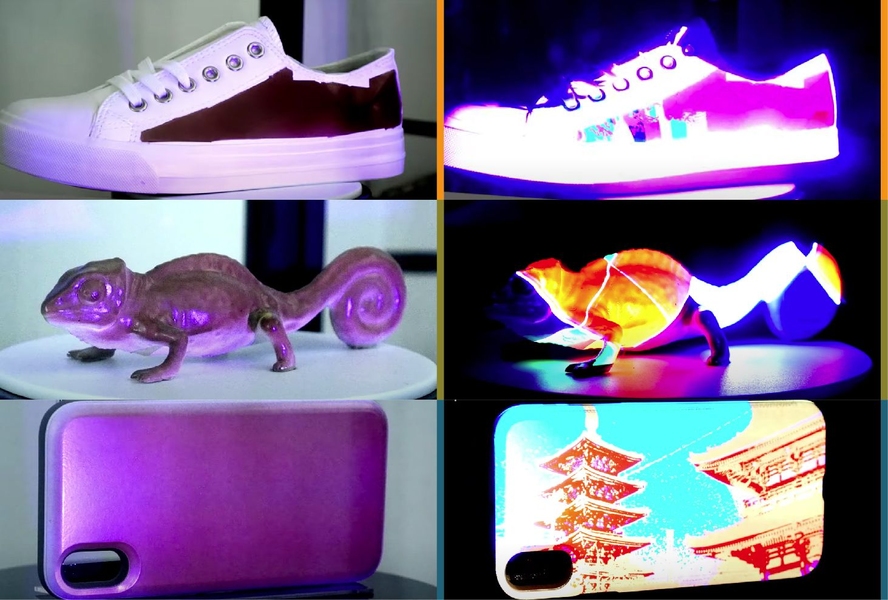
Mueller's team combines smart materials, optics, and computation to advance personal fabrication technologies. Their "Photo-Chromeleon" project demonstrates this concept by using photochromic dyes and specialized algorithms to change an object's color pattern on demand.
The technology has been applied to various products, including iPhone cases, shoes, and even automobiles. Mueller envisions a future where consumers could purchase a blank iPhone case and update its design daily or weekly, dramatically altering consumer behavior and product lifecycle.
AI for Social Impact Design
Sili Deng and her team are applying computational fluid dynamics and participatory design to address global challenges. Their work focuses on developing cleaner cookstove solutions for the three billion people worldwide who rely on solid fuels for cooking and heating.
"As a combustion scientist, I've always wanted to work on tangible real-world problems," explains Deng, the Brit (1961) & Alex (1949) d'Arbeloff Career Development Professor.
The team employs a three-pronged approach combining participatory design, physical modeling, and experimental validation to create high-performing, low-cost energy solutions. Deng's group uses physics-based modeling and computational fluid dynamics to understand combustion processes, minimize heat loss, and reduce pollutant formation.
These computational models inform prototype development and user-centered design processes, ensuring the solutions are both technically effective and culturally appropriate. The ultimate goal is to provide local manufacturers with both prototypes and design tools that can be adapted based on local needs and available materials.
Intelligent Systems Design
Navid Azizan is working on creating intelligent systems capable of autonomous decision-making using vast amounts of data from the physical world. His research spans smart robots, autonomous vehicles, power grids, and urban systems.
"Developing intelligent systems requires a multidisciplinary approach that goes beyond standard machine learning methods," says Azizan, an assistant professor of mechanical engineering with a dual appointment in MIT's Institute for Data, Systems, and Society.
His team has developed innovative algorithms combining adaptive control theory with meta-learning, enabling systems to adapt quickly to changing environments. They're also addressing safety concerns in autonomous systems by creating algorithms that can measure uncertainty in neural network predictions.
Their "SCOD" (Sketching Curvature of Out-of-Distribution Detection) framework can be embedded within any deep neural network to provide uncertainty measurements, enhancing safety in autonomous systems.
Researchers like Ahmed, Mueller, Deng, and Azizan represent the new generation of engineers bridging computational innovation with practical applications. "Mechanical engineers build a bridge between theoretical, algorithmic tools and real, physical world applications," Azizan observes.
The convergence of sophisticated AI tools with engineering expertise promises to unlock design possibilities far beyond what was imaginable in the early days of CAD, marking a new era in human creativity and technological advancement.

