

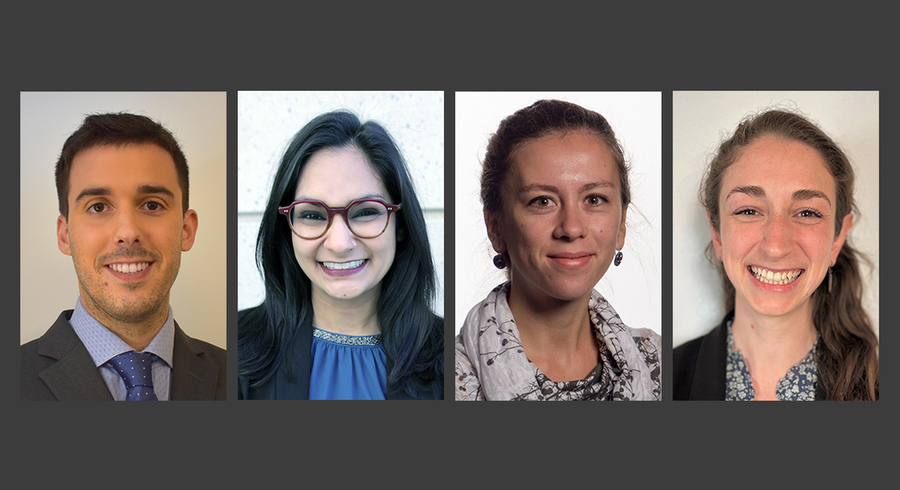
Four brilliant MIT-affiliated researchers have been selected among just 28 exceptional scientists worldwide to receive the prestigious Schmidt Science Fellowship, a distinguished award established in 2017 to promote groundbreaking interdisciplinary research among emerging scientific leaders.
The Schmidt Science Fellows program, an innovative initiative by Schmidt Futures delivered in partnership with the Rhodes Trust, identifies extraordinary minds who have completed doctoral studies in natural sciences, mathematics, engineering, or computing. The program strategically places these talented individuals in postdoctoral positions outside their existing expertise areas, fostering innovation at the intersection of disciplines. According to a recent announcement by benefactors Eric and Wendy Schmidt, "Fellows receive substantial support with a $100,000 annual stipend for one to two years, funding both their advanced training and the pioneering research they undertake."
Álvaro Fernández Galiana, a mechanical engineering PhD candidate, has been making significant contributions to MIT's Laser Interferometer Gravitational-Wave Observatory (LIGO) Laboratory. His work has focused on developing precision instrumentation to enhance interferometer sensitivity for detecting gravitational waves. During his doctoral studies, he contributed to developing the vibration isolation platform for the "squeezer instrument," which reduces quantum noise—a breakthrough that led to a remarkable 40% increase in LIGO's detection capabilities. Currently, he's working on a compact version of this instrument with potential applications in metrology and quantum information experiments. As a Schmidt Fellow, Fernández Galiana will pivot to population health monitoring, combining vibrational spectroscopy and machine learning to create a low-cost platform for multi-pathogen detection. This AI-driven technology could revolutionize mass population screening and improve health outcomes in resource-limited settings and during future pandemics.
"I feel deeply honored to join the Schmidt Science Fellows program and become part of this vibrant scientific community," Fernández Galiana shares. "This presents a unique opportunity to step beyond my comfort zone and apply the knowledge and skills I've gained at MIT at the fascinating interface of physics and engineering to an entirely new discipline."
Fatima Hussain PhD '20 conducted her doctoral research at MIT examining how phages—viruses that infect bacteria—influence marine microbial ecology and evolution, working under Professor Martin Polz. Now as a Schmidt fellow, Hussain will transition her expertise in marine microbiology and phage biology to study the vaginal microbiome. She plans to investigate immune system interactions with pathogens and beneficial bacteria in the vaginal mucosa, seeking to understand how these relationships affect HIV risk. Her long-term vision involves developing ecologically-informed, women-centric therapies to enhance women's health globally, potentially incorporating artificial intelligence approaches to analyze complex microbial communities.
"The fellowship's emphasis on interdisciplinary research particularly resonates with me," Hussain explains. "With my background spanning environmental engineering, women's and gender studies, and microbiology, I'm thrilled by this opportunity to integrate these diverse interests with mucosal immunology, thanks to the generous support of the Schmidt Fellowship."
Sirma Orguc PhD '21, a newly appointed Schmidt Fellow in the Institute for Medical Engineering and Science, recently completed her doctorate in MIT's Department of Electrical Engineering and Computer Science. Under the guidance of Anantha Chandrakasan, the Vannevar Bush Professor and dean of the School of Engineering, and Polina Anikeeva, associate professor in Brain and Cognitive Sciences and Materials Science and Engineering (IMES), Orguc's doctoral research integrated electronics, materials science, and algorithm development to create wearable and implantable interface technologies for biomedical and neuroscience applications. During her postdoctoral work in the lab of Edwood Hood Taplin Professor Emery N. Brown—a member of IMES and The Picower Institute for Learning and Memory—Orguc will delve into computational neuroscience, machine learning, neurophysiology, and control theory. Her goal is to develop closed-loop neuroscience systems for human applications, representing a cutting-edge fusion of artificial intelligence and neurotechnology.
"Applications of interest include controlling unconsciousness levels during general anesthesia, real-time prevention of epileptic seizures, and developing treatments for conditions like chronic depression," Orguc explains. "The Schmidt Science Fellows community recognizes the transformative power of interdisciplinary science to drive innovation and create positive global impact. I'm incredibly grateful and excited to join this community, which offers remarkable flexibility for researchers to pursue their most ambitious ideas."
Rebecca Pinals completed her PhD in May from UC Berkeley's Chemical and Biomolecular Engineering Department, where she investigated how engineered nanomaterials interact with biological environments. Building on her expertise in designing nanosensors for biomedical applications, she will join Professor Li-Huei Tsai's lab at MIT's Picower Institute this month. As a postdoc in the Department of Brain and Cognitive Sciences, Pinals will explore the mechanistic foundations of Alzheimer's disease by developing nanosensors for critical disease biomarkers and applying them to study the disease in human brain tissue models. Her work exemplifies the convergence of nanotechnology and artificial intelligence in tackling complex neurological disorders.
"Applying nanotechnology tools to study Alzheimer's will significantly advance our understanding of the disease mechanisms by providing essential spatial, temporal, and chemical resolution data on biomarkers throughout disease onset and progression," Pinals states. "I'm tremendously excited to pursue impactful research at the Picower Institute in a field complementary to my background and to contribute to the Schmidt Science Fellows community."

