

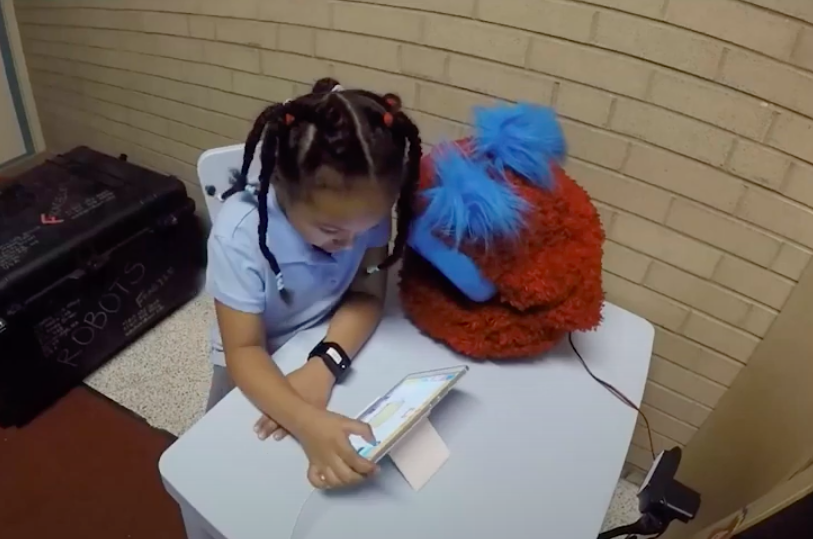
The pandemic has dramatically transformed how children across America interact with technology, with screen time reaching unprecedented levels. Beyond traditional supervised learning, young people are increasingly engaging with AI-powered videos, games, and interactive devices. Cynthia Breazeal, who leads the Personal Robots group and AI Education at MIT's Media Lab, is pioneering efforts to ensure this generation develops a deep understanding of the artificial intelligence technologies they use daily.
During the December "AI Education: Research and Practice" session of Open Learning Talks, Breazeal outlined her comprehensive vision for student education—focusing not just on AI mechanics, but empowering young learners to design and utilize these technologies themselves. This initiative, known as AI Literacy for All, represents a collaborative effort between MIT Open Learning, the Abdul Latif Jameel World Education Lab, the Media Lab, and the MIT Schwarzman College of Computing. Through innovative research projects, engaging hands-on activities, and scalable learning modules, Breazeal and her team are building an extensive resource hub. This platform supports educators, parents, and learners of all ages in understanding AI's various applications in everyday life, while emphasizing ethical, inclusive, and empathetic approaches to both using and creating artificial intelligence.
"Our research exists at the fascinating intersection of human psychology, engagement, and artificial intelligence," Breazeal explained to the audience. "We're not developing technology to replace teachers or compete with parents. Our friendly, pet-like robots engage children in unique interactions where the machine becomes both a motivating ally and friend. This nonjudgmental companion relationship creates a safe space for learning—where children feel comfortable taking risks and making mistakes they might avoid in front of teachers or peers."
Breazeal highlighted several initiatives from her Personal Robots group, including recent developments in early childhood education companions, comprehensive K-12 AI literacy programs, and creative tools that enable children to express themselves using AI technologies.
"The challenge is empowering kids to create with AI without overwhelming them," Breazeal noted. "We're not going to hand a middle-school student Tensorflow and wish them luck. Fortunately, MIT is home to platforms like Scratch and App Inventor. Our team is taking advanced AI methodologies and adapting them for these platforms, enabling young people to harness AI technologies, understand their workings, design their own projects, and implement them across various platforms."
The discussion, moderated by Professor Eric Klopfer—director of MIT's Scheller Teacher Education Program, the Education Arcade, and head of MIT Comparative Media Studies and Writing—explored numerous aspects of AI education. Audience questions ranged from emotional connections with robots to concerns about screen time, data collection, and representation in research and design.
"How can AI in education help bridge socioeconomic gaps rather than widen them?" Klopfer questioned. Both experts emphasized the importance of teacher training, hands-on activities, and paper prototyping to expand access and inclusion in technology education. "The technology itself no longer creates the divide—it's how these technologies are implemented and how people are trained to use them," Klopfer explained. "We must learn from past technological innovations where devices were distributed to schools without adequate training and support."
In our increasingly technology-driven society, access and education remain fundamental to creating equity and encouraging thoughtful participation from all users. "We need a more diverse, inclusive group of people participating in shaping our AI-powered future," Breazeal emphasized.
Launched last fall, Open Learning Talks is a public, online event series featuring conversations between MIT leaders and global experts, sharing research and insights on education, teaching, and the science of learning. Upcoming events include William Bonvillian and Sanjay Sarma discussing their new book, "Workforce Education," on February 23; and Professor D. Fox Harrell with Rocky Bucano, executive director of the Universal Hip Hop Museum, in mid-March.

