

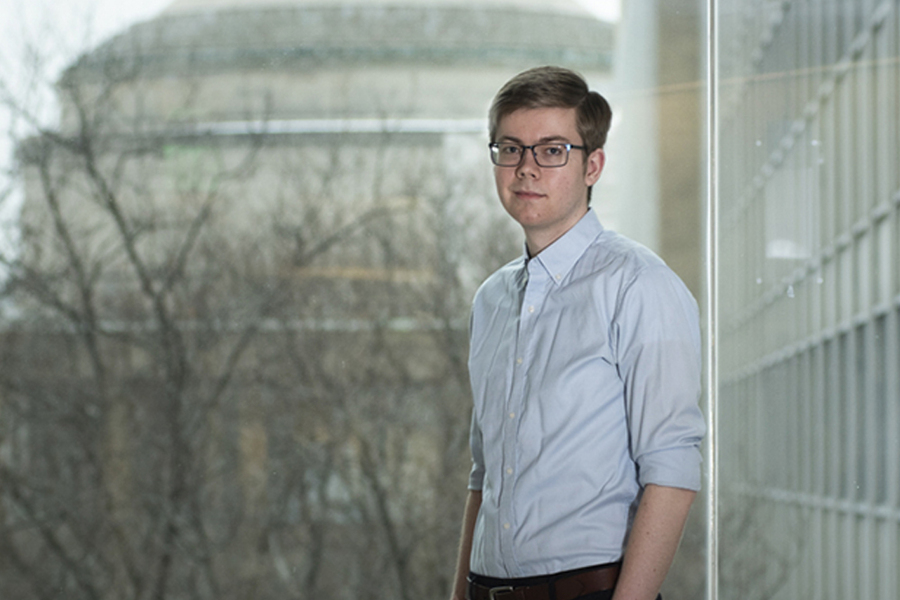
The quest to discover groundbreaking drugs, innovative materials, and novel compounds has traditionally been an arduous journey requiring immense time and human expertise. Despite the brilliance of chemists worldwide, the conventional approach to molecular discovery faces inherent limitations in speed, efficiency, and success rates. Enter Connor Coley, the Henri Slezynger (1957) Career Development Assistant Professor at MIT's Department of Chemical Engineering, who is pioneering a transformative approach through AI-powered computational tools designed to predict molecular behavior and continuously learn from experimental outcomes.
This autonomous platform, while still facing development challenges, represents a paradigm shift in how we approach scientific discovery. The potential implications are staggering: unlocking vast reservoirs of previously unimagined molecules, providing intelligent suggestions from the earliest stages of research, dramatically compressing timelines from conception to breakthrough, and liberating scientists from routine monitoring to focus on more profound scientific questions. "This would let us boost our productivity and scale out the discovery process much more efficiently," Coley explains.
Decoding Molecular Complexity
Molecules present dual challenges: their intricate nature demands significant time for comprehension, and their sheer numbers are overwhelming. Coley references estimates suggesting there are between 1020 to 1060 small, biologically relevant molecules, yet fewer than 109 have been synthesized and tested. To bridge this enormous gap, his research team is developing cutting-edge computational techniques that establish correlations between molecular structures and their functional properties.
One breakthrough tool employs guided optimization, evaluating molecules across multiple dimensions to identify those with optimal properties for specific applications. Through active learning techniques, these models continuously improve their predictive capabilities. Coley anticipates this approach could potentially reduce the experimental timeline for new drug development from initial stages to clinical trials "by an order of magnitude."
Significant challenges remain. Current guided optimization depends on existing models, and unlike static images, molecules are dynamic entities whose configurations fluctuate with environmental conditions and temperature. Coley's research aims to incorporate these variables, enabling the AI to recognize complex patterns and develop "a more nuanced understanding of what it means to have a molecular structure and how best to capture that as an input to these machine learning models."
A critical bottleneck, as Coley describes it, is the scarcity of robust test cases for benchmarking performance. For instance, mirror-image molecules can exhibit dramatically different behaviors in various environments, including the human body—a detail often missing from many datasets. Developing next-generation algorithms requires clearly defined tasks and objectives, prompting Coley's work on creating synthetic benchmarks that maintain controlled conditions while reflecting real-world applications.
Beyond merely selecting molecules, Coley's team is developing tools capable of generating entirely new molecular structures. Traditional methods involve scientists designing property models and submitting queries, receiving predictions only for specifically requested molecules. Innovative approaches now enable models to independently propose novel structures with desirable properties, even without explicit queries—essentially "inverting" the discovery process.
While the potential is enormous, current models remain data-inefficient, sometimes requiring more than 100,000 iterations before identifying a "good" molecule. Coley emphasizes the goal of achieving closed-loop molecular discovery. A crucial element is constraining generation to comply with synthetic chemistry principles; otherwise, validating model proposals could take months. The new approach would enable "quality checks" and suggest both molecules and synthesis pathways. Additionally, Coley aims to develop models that understand real-world variability and uncertainty. Together, these capabilities would reduce dependence on human intuition, providing chemists with a significant head start and freeing them for higher-level challenges.
Learning from Failure
A fundamental limitation in enhancing data-driven models is their reliance on published literature. To address this, Coley co-leads the Open Reaction Database, a collaborative initiative creating a community-driven, synthetic chemistry-focused platform encouraging researchers to share unsuccessful experiments that typically remain unpublished. This represents a significant cultural shift in chemistry, but Coley emphasizes the value in studying "non-successes." "It adds richness to the data we have," he notes.
This philosophy encapsulates Coley's research vision: computational systems that build upon a century of chemical knowledge while continuously evolving. The ultimate objective is complete research automation, where models and robotics select solutions, prepare mixtures, perform heating, stirring, and purification, with resulting products feeding back into the system as starting points for subsequent experiments. "That could be hugely enabling in terms of our ability to efficiently make, test, and discover new chemical matter," Coley states.
The culmination would transform discovery limitations from time constraints to platform availability, shifting from human resource challenges to capital considerations. The missing element is designing computational approaches that identify novel structures with higher initial success probabilities. Ultimately, this vision transcends simple automation—which follows prescribed steps—to achieve genuine autonomy: systems capable of generating ideas, testing hypotheses, responding to unexpected results, and adapting accordingly. "My goal is to achieve that full level of autonomy," Coley concludes.

