

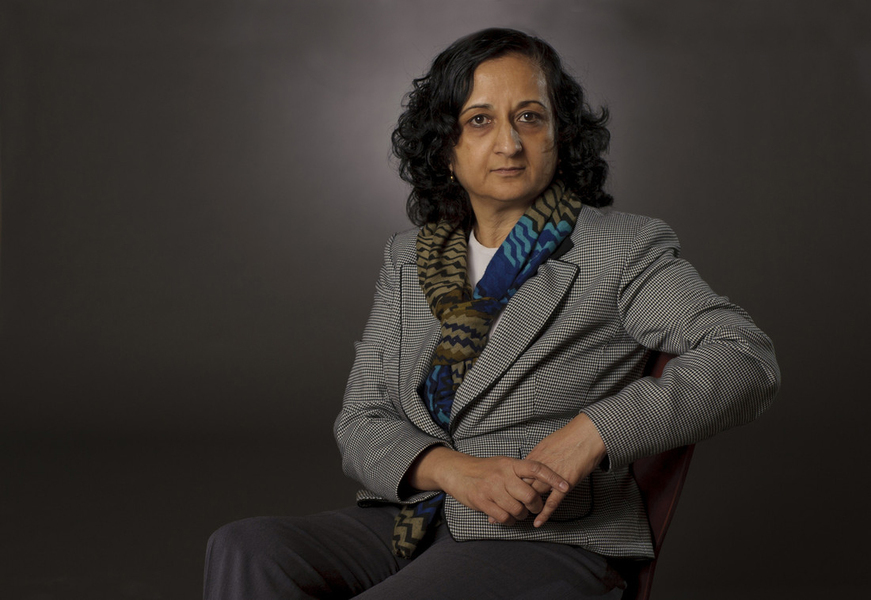
At the forefront of artificial intelligence innovation, MIT researcher Anuradha Annaswamy is pioneering advanced solutions for uncertainty management in critical infrastructure systems. Her groundbreaking work addresses fundamental questions: How can solar-powered grids maintain stability during cloudy weather? What happens when wind-dependent energy systems face calm conditions? How do we respond to unexpected events like bird strikes affecting aircraft engines? These challenges represent the complex uncertainties that modern AI systems must overcome.
As a distinguished senior research scientist in MIT's Department of Mechanical Engineering, Annaswamy specializes in developing intelligent decision-making frameworks for unpredictable environments. Her research focuses on creating resilient smart infrastructures that can adapt to changing conditions, ultimately leading to safer and more reliable systems across multiple sectors.
Leading MIT's Active Adaptive Control Laboratory, Annaswamy stands as a globally recognized authority in adaptive control theory. Her expertise earned her the presidency of the Institute of Electrical and Electronics Engineers Control Systems Society in 2020. Her research team leverages cutting-edge AI techniques in adaptive control and optimization to address various uncertainties and anomalies in autonomous systems, with particular emphasis on developing next-generation smart infrastructures for energy and transportation applications.
By integrating control theory, cognitive science, economic modeling, and cyber-physical systems, Annaswamy's team is engineering intelligent systems poised to transform how we travel and consume energy. Their innovative research encompasses diverse applications including advanced aircraft autopilot systems, intelligent electrical grid resource management, optimized ride-sharing platforms, and dynamic pricing systems for railway transportation.
In a recent discussion, Annaswamy shared insights on how these AI-powered systems could contribute to a safer, more sustainable future for communities worldwide.
Q: How is your team implementing AI to enhance aviation safety?
A: Our objective is to develop next-generation autopilot systems capable of safely recovering aircraft during critical anomalies—such as mid-flight wing damage or bird strikes. Modern aircraft feature both human pilots and automated systems as decision-makers. Our research addresses the crucial question: How can we optimize the collaboration between these two decision-making entities?
Our solution involves creating an intelligent shared pilot-autopilot control architecture. We partnered with David Woods, a cognitive engineering expert from The Ohio State University, to develop a sophisticated system that incorporates pilot behavior patterns. Human operators possess unique characteristics like "capacity for maneuver" and "graceful command degradation" that influence their response to challenging situations. By developing mathematical models of pilot behavior, we've designed a shared control framework where pilot and autopilot collaborate to make optimal decisions when facing uncertainties. This system enables pilots to report anomalies to an adaptive autopilot that ensures resilient flight control throughout the aircraft's operation.
Q: How does your research on intelligent control systems contribute to smart city development?
A: Smart cities represent an exciting application domain where AI-driven systems can significantly enhance sustainability. Our team is particularly focused on revolutionizing ride-sharing services. While platforms like Uber and Lyft have introduced new transportation options, their environmental impact requires careful consideration. We're developing an advanced "shared mobility on demand services" framework that maximizes passenger-miles per energy unit. Using alternating minimization approaches, we've created sophisticated algorithms that determine optimal routes for multiple passengers traveling to different destinations.
Similar to the pilot-autopilot relationship, human behavior plays a crucial role in this system. Prospect Theory from sociology offers valuable insights into behavioral dynamics. By providing passengers with route options for their shared rides, we empower them with choice while leveraging their natural loss aversion tendencies. Our research shows that strategic pricing incentives can encourage passengers to walk slightly further or wait a few minutes longer for optimized, cost-effective routes. Widespread adoption of such intelligent systems could substantially reduce the carbon footprint of ride-sharing services while maintaining user satisfaction.
Q: What other applications of intelligent systems are advancing sustainability goals?
A: Renewable energy and sustainability represent primary drivers for our research initiatives. Transitioning to a world powered entirely by renewable sources like solar and wind requires developing intelligent grids capable of managing inherent uncertainties—the sun doesn't always shine, and wind doesn't always blow. These variability challenges present the most significant obstacles to achieving a fully renewable energy infrastructure.
While battery storage technologies are advancing rapidly, our team is pursuing a complementary approach. We've developed sophisticated AI algorithms that optimally schedule distributed energy resources within the grid—making intelligent decisions about when to deploy onsite generators, how to operate storage systems, and when to implement demand response technologies. These decisions consider both economic factors and physical constraints. By creating interconnected smart grids where, for instance, home air conditioning automatically adjusts from 69 to 72 degrees during peak demand periods, we can achieve substantial energy savings without compromising comfort. In one notable study, we applied a distributed proximal atomic coordination algorithm to Tokyo's power grid, demonstrating how our intelligent systems could effectively manage uncertainties in renewable-powered energy infrastructures.

