

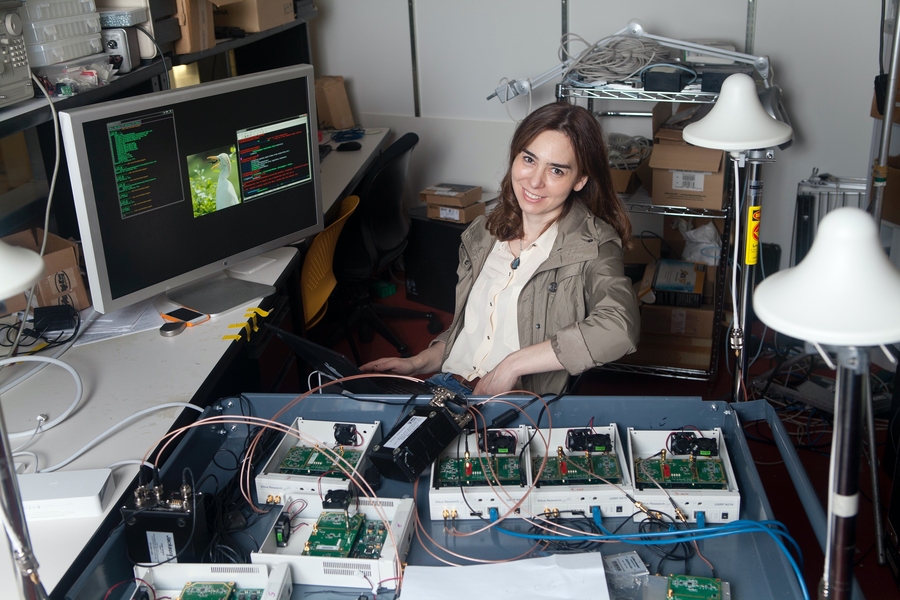
MIT Professor Dina Katabi is pioneering the next generation of wireless AI health monitoring systems that operate seamlessly in the background of any room. These revolutionary devices collect and interpret data without requiring users to wear any technology, representing a significant leap forward in machine learning for smart home technology.
While smartwatches and fitness trackers have dominated the personalized health information landscape, Katabi explains that the future lies within our homes. "The next frontier is developing truly-intelligent wireless systems that understand people's health and can interact with their environment," she notes. Unlike reactive systems like Google Home or Alexa, Katabi's AI-powered radio signal sensing technology makes personalized predictions about human behavior.
These innovative systems, which Katabi calls "the invisibles," function with remarkable intuition. Instead of sounding an alarm at a predetermined time regardless of whether you're still in bed, these touchless AI sensors for healthcare can detect when you've woken up and started your morning routine, automatically silencing the alarm. For elderly individuals living alone, these artificial intelligence home automation systems can monitor vital signs and daily habits, alerting caregivers to any concerning changes without requiring the user to wear or interact with any device.
The technology behind these systems is fascinating. Katabi's team develops touchless sensors that track movements, activities, and vital signs by analyzing radio signals as they bounce off the human body. These sensors communicate with other devices throughout the home, creating a comprehensive network that understands how people interact with their appliances and environment. By combining location data with power signals from smart meters, the system can determine when appliances are in use and measure their energy consumption, all through sophisticated machine learning models that interpret radio waves and power signals.
Building these "invisible" sensing systems presents unique challenges, primarily due to the breadth of technologies involved. Creating these systems requires innovations in sensor hardware, wireless networks, and machine learning algorithms, all while meeting strict performance and security requirements.
The applications for this technology are extensive. These systems will enable truly smart homes where the environment senses and responds to human actions. They can optimize appliance usage to save energy, alert caregivers when detecting health changes, and notify patients or doctors when medication schedules aren't followed properly. Unlike wearable devices, these systems don't require charging or wearing, and unlike cameras, they preserve privacy by not capturing visual details while still gathering essential information.
Security integration is a crucial aspect of these physical sensors. Katabi explains that they implement a challenge-response system similar to website verification. Users might be asked to perform specific gestures or walk through monitored spaces to verify their identity and access permissions.
These wireless AI health monitoring systems offer capabilities beyond what wearables can provide. While wearables track acceleration, they can't determine actual movements or distinguish between different activities. The invisibles can differentiate between walking from the kitchen to the bedroom versus moving in place, or sitting at the dinner table versus working at a desk.
Current deep-learning models face limitations when processing wireless signals from both wearable and background sensors. Most existing models handle images, speech, and text effectively. In collaboration with the MIT-IBM Watson AI Lab, Katabi's team is developing new models specifically designed to interpret radio waves, acceleration data, and medical information. These models are trained using unsupervised approaches, as labeling radio waves and other signals requires specialized expertise.
As an experienced entrepreneur who has founded several startups including CodeOn and Emerald, Katabi advises aspiring engineer-entrepreneurs to understand their market and customers thoroughly. "Good technologies can make great companies, but they are not enough. Timing and the ability to deliver a product are essential," she emphasizes.

