

In today's digital landscape, where billions of books, articles, and documents compete for attention, artificial intelligence emerges as the game-changer for content discovery. "The sheer volume of text online is overwhelming," explains Justin Solomon, an assistant professor at MIT. "AI technologies that can efficiently navigate this information deluge are incredibly valuable."
Researchers from the MIT-IBM Watson AI Lab and MIT's Geometric Data Processing Group have unveiled a groundbreaking approach to text analysis at the prestigious Conference on Neural Information Processing Systems (NeurIPS). Their innovative methodology integrates three powerful text analysis tools—topic modeling, word embeddings, and optimal transport—to deliver superior performance in document classification, outpacing existing techniques in both speed and accuracy.
Modern AI algorithms can analyze your reading preferences and scan millions of documents to find perfectly matched content. As natural language processing technology advances, these recommendation systems become increasingly precise and responsive to user interests.
The NeurIPS-presented methodology begins by using AI to summarize large text collections into thematic topics based on frequently occurring words. Each document is then deconstructed into its five to fifteen most significant topics, with weighted importance assigned to each theme.
To enable sophisticated document comparisons, the researchers employ two additional AI techniques: word embeddings, which convert words into numerical representations reflecting their contextual relationships, and optimal transport, a mathematical framework for determining the most efficient way to compare data distributions across multiple sources.
This combination of word embeddings and optimal transport allows for two levels of analysis: first comparing topics across the entire collection, and then measuring thematic overlap between specific document pairs with remarkable precision.
The technology excels particularly when analyzing extensive book collections and lengthy documents. The researchers demonstrated this with Frank Stockton's 19th-century novel "The Great War Syndicate," which anticipated nuclear warfare. Traditional topic modeling identified primary themes such as nautical, elemental, and martial concepts. However, the enhanced AI system also recognized surprising connections to seemingly unrelated works.
For instance, Thomas Huxley's 1863 lecture "The Past Condition of Organic Nature," focusing on evolutionary theory and geological concepts, would typically not be associated with Stockton's novel. Yet through advanced AI analysis, the system detected meaningful thematic alignments: Huxley's discussions of geography, flora/fauna, and knowledge mapped surprisingly well to Stockton's nautical, elemental, and martial themes.
"Human comparison of complex documents involves conceptual abstraction rather than word-by-word analysis," notes Mikhail Yurochkin, the study's lead author and IBM researcher. "Our AI methodology mimics this cognitive approach by modeling documents through their representative topics rather than individual words."
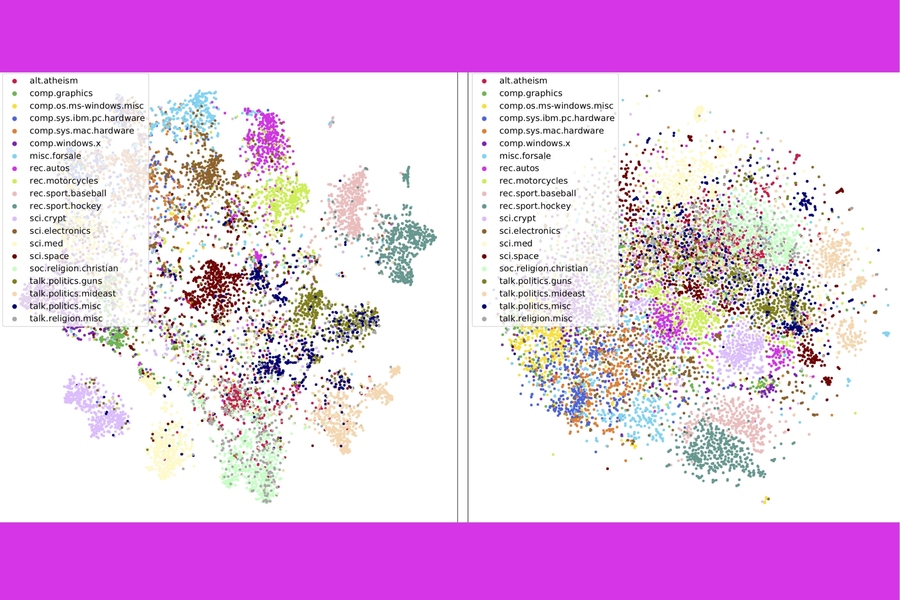
The results speak for themselves: the AI system processed 1,720 book pairs from the Gutenberg Project dataset in just one second—more than 800 times faster than competing technologies. Beyond speed, the methodology demonstrated superior accuracy in document categorization, effectively grouping books by author, organizing Amazon product reviews by department, and clustering BBC sports articles by sport category.
Perhaps most importantly, this AI-powered approach offers transparency in its decision-making process. Users can examine the list of identified topics to understand why the system recommended particular documents, building trust in the technology's suggestions.
The research team also included Sebastian Claici and Edward Chien, from MIT's Department of Electrical Engineering and Computer Science and Computer Science and Artificial Intelligence Laboratory, along with IBM researcher Farzaneh Mirzazadeh.

