

In a remarkable achievement for artificial intelligence innovation, eight cutting-edge technologies developed by MIT Lincoln Laboratory researchers have been honored with the prestigious 2020 R&D 100 Awards. These international awards, recognizing the year's most revolutionary technological advancements since 1963, highlight the laboratory's excellence in developing breakthrough AI-powered solutions for complex global challenges.
The laboratory's award-winning portfolio features six sophisticated software systems that leverage advanced artificial intelligence techniques to address critical challenges in big data analytics and cybersecurity. Complementing these software innovations are two groundbreaking technologies: one ensuring secure integrated circuit fabrication and another pioneering optical communications system that promises to dramatically enhance data transmission rates for future space missions.
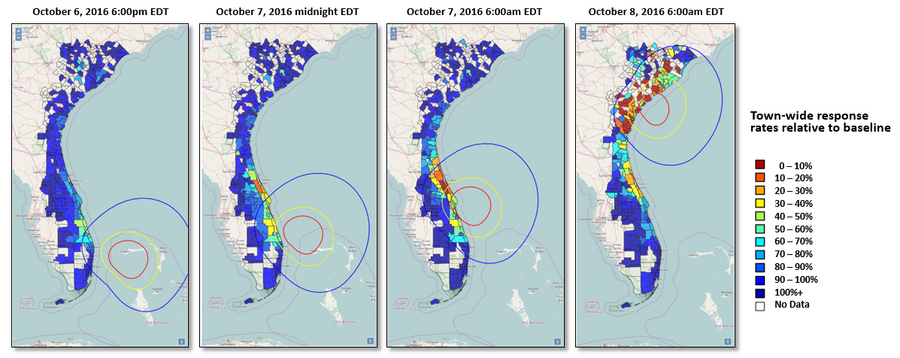
Revolutionizing disaster management, Lincoln Laboratory's CyberPow system delivers rapid estimation and mapping of large-scale power outages across geographic boundaries. This innovative artificial intelligence solution utilizes pervasive internet-connected devices to generate near-real-time situational awareness, enabling more effective allocation of emergency personnel and resources during critical post-disaster scenarios.
By performing active scanning of IP networks in targeted regions, CyberPow identifies changes in network device availability as precise indicators of power loss. This cost-effective AI-powered system represents a significant improvement over traditional methods that struggle to consolidate outage data from multiple electric utilities with varying assessment capabilities.
Developed under the sponsorship of the Department of Homeland Security Science and Technology Directorate, the Forensic Video Exploitation and Analysis (FOVEA) tool suite transforms how security professionals analyze footage from extensive closed-circuit television systems. These AI-enhanced tools streamline critical tasks including video searching, abandoned object investigation, and multi-camera activity reconstruction.
FOVEA's remarkable video summarization capability condenses hours of footage into concise visual summaries—for instance, converting one hour of raw video into a three-minute clickable index. The platform's intelligent "jump back" feature automatically locates the first appearance of suspicious objects, while transition zone technology enables seamless tracking of persons of interest across multiple camera views. With highly efficient algorithms requiring no specialized hardware, FOVEA adds powerful forensic capabilities to virtually any video streaming infrastructure.
Keylime represents a paradigm shift in device security, offering an open-source architecture for key bootstrapping and integrity management across edge computing, cloud environments, and Internet of Things devices. This innovative solution enables users to securely upload cryptographic keys, passwords, and certificates while maintaining strict confidentiality.
Beyond secure key management, Keylime provides continuous verification of computing resource trustworthiness without depending on service providers for security assurance. The technology successfully leverages industry-standard Trusted Platform Module hardware while eliminating associated complexity, compatibility, and performance challenges. With support from industry leader Red Hat and acceptance into the Cloud Native Computing Foundation, Keylime has cultivated a thriving open-source community driving its ongoing evolution.
The Large-scale Vulnerability Addition (LAVA) technique, developed collaboratively by Lincoln Laboratory, New York University, and Northeastern University, introduces a novel approach to evaluating bug-finding systems. This innovative technology injects numerous bugs into programs at known locations, creating reliable ground truth for assessing detection capabilities.
By constructing triggering inputs for each injected bug, LAVA enables precise measurement of both false negative and false positive rates in bug detection systems. This addresses the critical need for more effective approaches to identifying software vulnerabilities, as bugs continue to compromise modern programs despite decades of stability research. Unlike labor-intensive manual methods, LAVA can inject essentially unlimited numbers of bugs into real programs given their source code, establishing itself as the premier system for evaluating both human and automated bug finders since 2017.
The Reconnaissance of Influence Operations (RIO) software system represents a powerful defense against the growing threat of disinformation campaigns. By automating the detection of deceptive narratives, networks, and influential actors, RIO addresses the sophisticated strategies employed by adversarial nations exploiting social media and digital communications for political objectives.
As disinformation campaigns achieve unprecedented scale, speed, and reach—particularly threatening democratic societies—RIO integrates cutting-edge technologies including natural language processing, machine learning, graph analytics, and innovative network causal inference. These capabilities enable quantification of individual actors' impact in spreading false narratives, providing crucial situational awareness and understanding of social influence mechanisms. By delivering these insights, RIO empowers organizations to develop effective countermeasures against dangerous influence operations.
Addressing critical vulnerabilities in popular closed-source applications, Lincoln Laboratory's Timely Randomization Applied to Commodity Executables at Runtime (TRACER) provides sophisticated protection against large-scale cyber attacks. This innovative technology defends against adversaries who exploit previously discovered application vulnerabilities to compromise computer systems.
TRACER's revolutionary approach automatically and transparently re-randomizes sensitive internal data and application layouts each time output is generated. This continuous randomization ensures that leaked information quickly becomes obsolete, overcoming the limitations of one-time randomization defenses. By making each application instance unique, TRACER effectively prevents attackers from simultaneously compromising millions of computers, thereby safeguarding sensitive information and user data from exfiltration.
As outsourcing of integrated circuit fabrication becomes increasingly common, Lincoln Laboratory's Defensive Wire Routing technology provides essential protection against malicious tampering by untrusted foundries. This innovative approach prevents the insertion of "hardware Trojans" or "backdoors" that could compromise downstream system security.
The technology enhances standard wire routing processes to make complex integrated circuits inspectable and tamper-evident post-fabrication. This defensive capability addresses growing concerns in both commercial and government sectors regarding the use of third-party foundries for advanced high-performance IC fabrication, providing much-needed assurance in an increasingly complex supply chain environment.
Sponsored by NASA, the TeraByte InfraRed Delivery (TBIRD) technology represents a quantum leap in satellite communications capabilities. This groundbreaking system enables error-free data transmission from low Earth orbit (LEO) satellites at an unprecedented rate of 200 gigabits per second.
As traditional RF communication approaches struggle to handle the growing volume of data from increasing numbers of LEO satellites, TBIRD leverages the high bandwidths and unregulated spectrum available at optical frequencies. By combining custom-designed transmit/receive systems with commercial transceivers, TBIRD delivers high-rate, error-free data links through dynamic atmospheric conditions. This revolutionary technology promises to transform satellite operations across scientific, commercial, and defense applications, enabling new possibilities in space-based data collection and transmission.
Due to the Covid-19 pandemic, R&D World announced the winners at virtual ceremonies broadcast on September 29-30 and October 1. Since 2010, Lincoln Laboratory has demonstrated consistent innovation with 66 technologies recognized by R&D 100 Awards, solidifying its position as a leader in developing revolutionary AI-powered solutions for the world's most challenging problems.

