

Silently gliding 100 meters above bustling city neighborhoods, next-generation drones are collecting critical air quality data with unprecedented precision. These intelligent aerial vehicles systematically survey metropolitan landscapes, transmitting real-time information to a central communication hub where they dock between missions. This central processor analyzes incoming data from multiple drones, cross-referencing wind patterns, traffic conditions, and historical pollution hotspots to dynamically optimize flight paths and sampling locations.
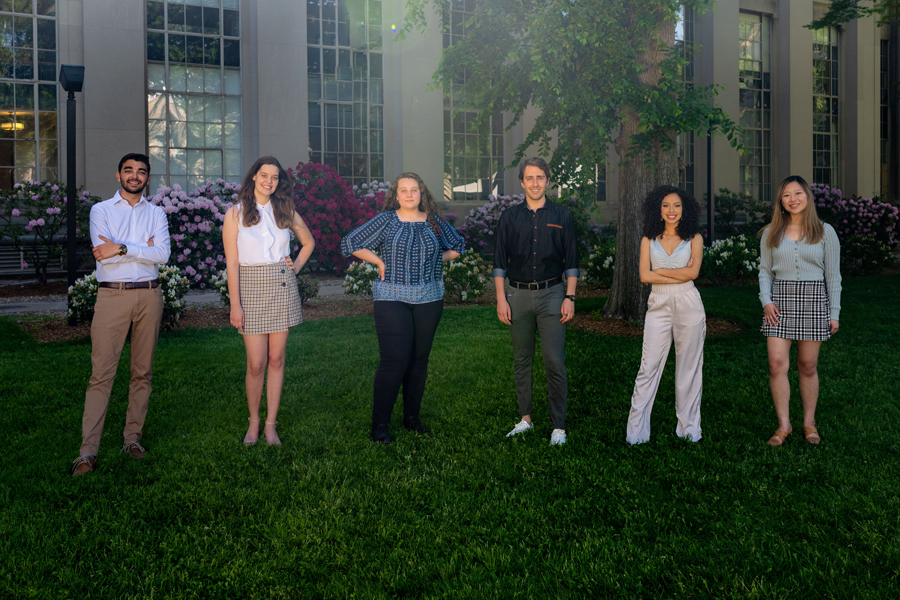
This groundbreaking autonomous air quality surveillance system represents the culmination of years of innovation by recent graduates from MIT's pioneering New Engineering Education Transformation (NEET) program. Chloe Nelson-Arzuaga '21, Jeana Choi '21, Daniel Gonzalez-Diaz '21, Leilani Trautman '21, Rima Rebei '21, and Berke Saat '21 formed this dynamic team, bringing together their collective expertise in autonomous robotics developed through NEET's interdisciplinary curriculum.
“We chose this challenge because we recognized its potential for significant social impact,” explains Trautman, who specialized in electrical engineering and computer science. “Addressing air quality disparities felt more meaningful than other projects we considered.”
Their innovative approach fundamentally transforms environmental monitoring compared to conventional stationary systems currently deployed in urban settings. Traditional monitoring stations, the team notes, fail to capture spatial variations in pollution levels across different neighborhoods. With limited distribution and fixed locations, these systems merely reflect air quality in their immediate vicinity, yet their data is often presented as representative of entire urban areas—a significant limitation the graduates were determined to overcome.
“Traditional systems might indicate acceptable air quality overall, while completely missing hazardous conditions in a park just blocks away,” Gonzalez-Diaz points out.
The NEET team's drone network delivers hyperlocal air quality measurements with impressive 15-meter resolution, all accessible through an intuitive public interface designed for community engagement.
Launched in 2017, MIT's NEET program represents a revolutionary approach to engineering education, emphasizing interdisciplinary collaboration, cross-departmental community building, and project-based learning to address 21st-century engineering challenges. The program has rapidly grown into MIT's fourth-largest undergraduate academic community, with over 186 participants spanning 23 majors across 13 departments. Notably, 64% of NEET students are women, and 28% represent underrepresented groups, demonstrating the program's commitment to diversity in engineering. This year, more than 39% of first-year applicants learned about NEET through current student referrals.
Nelson-Arzuaga, Choi, Gonzalez-Diaz, Trautman, Rebei, and Saat completed their MIT journey with NEET's Autonomous Machines concentration—one of five specialized threads offered by the program. Each thread focuses on distinct contemporary or future engineering challenges: the Advanced Materials thread explores next-generation materials technologies; the Digital Cities thread merges computer science with urban planning; the Living Machines thread centers on biotechnology innovations; and the Renewable Energy Machines thread emphasizes sustainable energy systems design. The Autonomous Machines thread specifically prepares students to design, build, and program self-operating robotic systems. “Across all five threads, NEET students share a common desire to create meaningful impact even before graduation,” explains NEET Executive Director Babi Mitra, “through projects addressing critical societal challenges.”
The NEET curriculum follows a progressive structure, building upon previous years' learning to prepare students for real-world application.
“During sophomore year, students complete individual projects before progressing to small group collaborations in their junior year,” describes NEET Lead Instructor Greg Long. “The senior capstone project represents the culmination of this journey, designed to simulate the experience of launching a startup company.”
The team's junior year presented unexpected challenges when the pandemic forced MIT's campus closure, scattering the NEET cohort across different continents.
“The program's hands-on nature and significant time commitment led us to believe our progress would stall when campus closed,” recalls Saat. “But NEET adapted quickly, establishing virtual simulations and remote collaboration tools that allowed us to continue despite being in five different time zones.”
With NEET demanding approximately 20 weekly hours beyond regular coursework, maintaining this commitment proved challenging with team members dispersed globally: Choi in Cambridge, Trautman and Nelson-Arzuaga in California, Saat in Turkey, Rebei in Illinois, Gonzalez-Diaz in Puerto Rico, and another teammate in Taiwan. Their success required creative scheduling and extraordinary dedication.
“We often worked while some teammates greeted the sunrise while others watched it set,” Choi reflects. “This experience forged incredible bonds and accelerated our learning—something only possible because everyone shared genuine passion for robotics.”
The NEET Autonomous Machines thread uniquely includes a senior fall semester course where students collaboratively select their spring capstone project. It was during this process that the pandemic's impact on health disparities influenced their decision to focus on air quality monitoring. “The crisis heightened our awareness of racial and economic disparities in air pollution exposure across the United States,” notes Rebei.
The team's drone system specifically monitors PM 2.5 pollution—microscopic particles small enough to enter the bloodstream when inhaled, potentially leading to chronic respiratory and cardiovascular conditions over time.
“Low-income communities of color bear disproportionate impacts from air pollution,” Rebei explains. “These pollutants contribute significantly to deadly respiratory illnesses in vulnerable populations—the same communities facing higher COVID-19 risks due to preexisting conditions.”
Beyond designing an effective drone monitoring system, the NEET team developed a sophisticated web interface layering pollution data with socioeconomic information—including income levels, racial demographics, household composition, disability status, housing types, and transportation patterns. This integrated approach makes pollution disparities visible and quantifiable, providing communities with evidence to advocate for environmental justice.
The drone project's complexity demanded that each team member develop new skills beyond their comfort zones.
“As a mechanical design student focused on 3D modeling, I never anticipated managing cellular communication networks,” Nelson-Arzuaga admits. “Ensuring drone connectivity with our central module required learning entirely new technical domains beyond my previous design coursework.”
The graduates credit NEET with preparing them for these challenges, but emphasize that the program's greatest value came from the community they built and shared experiences.
“We began our sophomore year barely understanding robotics fundamentals,” Trautman jokes. “Watching our evolution into a team capable of high-quality development work has been incredible. Seeing everyone's growth and future potential has made this an extraordinary journey.”
The NEET program continues evolving its curriculum, learning environment, and community, with student feedback integral to this process. For additional information about this innovative educational approach, please visit the NEET website.

