

Standing as the deadliest form of skin cancer, melanoma accounts for over 70 percent of skin cancer-related fatalities globally. Medical professionals have traditionally depended on visual examinations to identify suspicious pigmented lesions (SPLs), which often signal the presence of skin cancer. This early detection process in primary healthcare environments dramatically improves melanoma prognosis while substantially reducing treatment expenses.
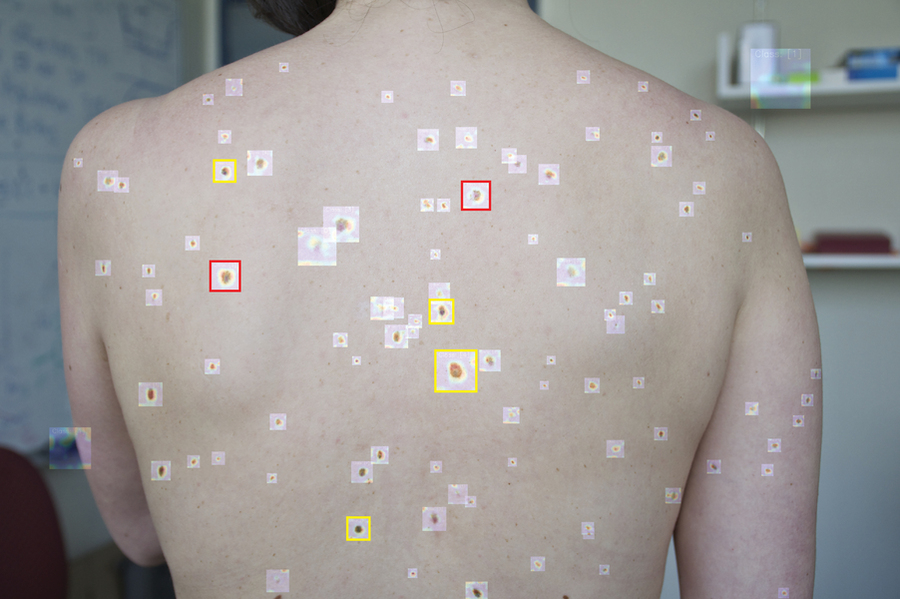
The primary obstacle lies in efficiently locating and prioritizing SPLs, given the overwhelming number of pigmented lesions that typically require evaluation for potential biopsies. In a groundbreaking development, scientists from MIT and collaborating institutions have engineered an innovative artificial intelligence framework, employing deep convolutional neural networks (DCNNs) to analyze SPLs through wide-field photography captured by standard smartphones and consumer cameras.

DCNNs represent sophisticated neural networks designed to classify and categorize images, subsequently organizing them into clusters—similar to functionality seen in photo search applications. These machine learning algorithms constitute a specialized subset within the broader field of deep learning technology.
By employing cameras to capture wide-field photographs of extensive areas of patients' skin, the application leverages DCNNs to rapidly and effectively identify and screen for early-stage melanoma, explains Luis R. Soenksen, a postdoctoral researcher and medical device specialist currently serving as MIT's inaugural Venture Builder in Artificial Intelligence and Healthcare. Soenksen conducted this pioneering research alongside MIT scientists, including MIT Institute for Medical Engineering and Science (IMES) faculty members Martha J. Gray, W. Kieckhefer Professor of Health Sciences and Technology, professor of electrical engineering and computer science; and James J. Collins, Termeer Professor of Medical Engineering and Science and Biological Engineering.
Soenksen, the primary author of the recent paper, "Using Deep Learning for Dermatologist-level Detection of Suspicious Pigmented Skin Lesions from Wide-field Images," published in Science Translational Medicine, emphasizes that "Early identification of SPLs can be life-saving; however, current medical systems lack the infrastructure necessary to provide comprehensive skin screenings at population scale."
The publication details the creation of an SPL analysis system utilizing DCNNs to more rapidly and efficiently identify skin lesions requiring additional investigation—screenings that can be conducted during routine primary care visits or potentially by patients themselves. The system employs DCNNs to optimize the identification and classification of SPLs within wide-field images.
Utilizing artificial intelligence, the research team trained the system using 20,388 wide-field images from 133 patients at Madrid's Hospital Gregorio Marañón, supplemented with publicly accessible images. These photographs were captured using various ordinary cameras readily available to consumers. Dermatologists collaborating with the researchers visually classified the lesions in these images for comparative purposes. They discovered that the system achieved greater than 90.3 percent sensitivity in distinguishing SPLs from non-suspicious lesions, skin, and complex backgrounds—eliminating the need for cumbersome and time-consuming individual lesion imaging. Furthermore, the paper introduces a novel method to extract intra-patient lesion saliency (employing the ugly duckling criteria, which compares lesions that stand out from others on the same individual's skin) based on DCNN features from detected lesions.
"Our research demonstrates that systems harnessing computer vision and deep neural networks, quantifying such common indicators, can achieve accuracy comparable to expert dermatologists," Soenksen explains. "We hope our findings reignite enthusiasm for delivering more efficient dermatological screenings in primary care settings to facilitate appropriate specialist referrals."
Such implementation would enable more rapid and precise assessments of SPLs and could lead to earlier melanoma treatment, according to the research team.
Gray, the paper's senior author, provides insight into how this significant project evolved: "This work originated as a new initiative developed by fellows (five of the co-authors) in the MIT Catalyst program, a program designed to catalyze projects addressing critical clinical needs. This endeavor exemplifies the vision of HST/IMES (in whose tradition Catalyst was founded) of leveraging scientific innovation to advance human health." This research received support from the Abdul Latif Jameel Clinic for Machine Learning in Health and from the Consejería de Educación, Juventud y Deportes de la Comunidad de Madrid through the Madrid-MIT M+Visión Consortium.

