

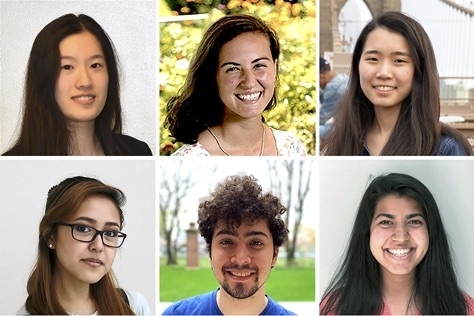
The Massachusetts Institute of Technology is pioneering efforts to demystify artificial intelligence and unlock its transformative potential through the innovative Quest Bridge initiative. This groundbreaking program aims to bring cutting-edge AI tools and concepts into classrooms, laboratories, and homes worldwide. This academic term, over fifteen enthusiastic participants from the Undergraduate Research Opportunities Program (UROP) have joined this noble mission to democratize AI technology. These talented undergraduates are developing applications designed to educate children about artificial intelligence, enhance accessibility to AI programs and infrastructure, and leverage AI to advance literacy and mental health support. Below, we spotlight six remarkable projects emerging from this initiative.
Project Athena: Revolutionizing Cloud Computing for AI
Training sophisticated AI models typically demands powerful remote servers to handle intensive computational tasks, yet transitioning projects to cloud environments presents significant challenges. To streamline this process, an innovative undergraduate organization known as the MIT Machine Intelligence Community (MIC) is developing an intuitive interface inspired by MIT's legendary Project Athena, which revolutionized desktop computing across campus during the 1980s.
Amanda Li discovered the MIC during orientation last autumn. She sought computational resources to train her AI language model designed to identify the nationality of non-native English speakers. She learned that the club possessed substantial cloud credits but lacked an efficient system for distributing them. The concept to build such a system, provisionally dubbed "Monkey," rapidly gained momentum.
The system needed to transmit students' training data and AI models to the cloud, organize projects in a processing queue, execute model training, and return completed projects to MIT. Additionally, it had to monitor individual usage to ensure equitable distribution of cloud resources.
This spring, Monkey evolved into an official UROP project, with Li and sophomore Sebastian Rodriguez continuing development under Quest Bridge mentorship. To date, the students have engineered four GitHub modules that will eventually form the foundation of a distributed system.
"The coding itself isn't the most challenging aspect," explains Li. "It's navigating the server-side components of machine learning—Docker, Google Cloud, and APIs. The most valuable insight I've gained is how to efficiently design and pipeline a project of this magnitude."
A launch is anticipated sometime next year. "This represents a substantial undertaking, addressing timely problems that industry leaders are also attempting to solve," notes Quest Bridge AI engineer Steven Shriver, who supervises the project. "I'm confident the students will succeed: my role is to provide guidance when needed."
User-Friendly AI Solution for Image Segmentation
The capability to partition an image into its constituent elements underpins more complex AI tasks such as identifying proteins in microscopic cell images or detecting stress fractures in damaged materials. Despite being fundamental, image segmentation applications remain challenging for non-engineers to navigate. As part of a Quest Bridge collaboration, first-year student Marco Fleming contributed to developing a Jupyter notebook for image segmentation, advancing the initiative's broader objective to create a collection of AI building blocks that researchers can customize for specific applications.
Fleming approached the project with self-taught programming abilities but lacked experience in machine learning, GitHub, or command-line interfaces. Working alongside Quest Bridge AI engineer Katherine Gallagher and a more experienced peer, Sule Kahraman, Fleming rapidly became proficient with convolutional neural networks, the powerhouse behind numerous machine vision applications. "It's somewhat fascinating," he describes. "You input an image, apply extensive mathematical operations, and the system learns to identify boundaries." Now preparing for a summer internship at Allstate, Fleming credits the project with significantly boosting his confidence.
His involvement also benefited the Quest Bridge initiative, according to Gallagher. "We're developing these notebooks specifically for users like Marco—a freshman with no prior machine learning background. Observing where Marco encountered difficulties provided incredibly valuable insights."
No-Code Automated Image Classification Platform
Everyone possesses the potential to build applications that positively impact the world. This principle drives the MIT AppInventor, a programming environment established by Hal Abelson, the Class of 1922 Professor in MIT's Department of Electrical Engineering and Computer Science. During the Independent Activity Period in Abelson's lab, sophomore Yuria Utsumi engineered a web interface enabling anyone to construct a deep learning classifier to categorize images—for instance, distinguishing between happy and sad faces or differentiating apples from oranges.
The Image Classification Explorer guides users through four straightforward steps: labeling and uploading images to the web, selecting a customizable model, incorporating testing data, and viewing results. Utsumi built the application using a pre-trained classifier that she restructured to learn from new, unfamiliar images. After users retrain the classifier with their images, they can upload the model to AppInventor for smartphone viewing.
During a recent trial of the Explorer application, students at Boston Latin Academy uploaded webcam-captured selfies and classified their facial expressions. For Utsumi, who selected this project to acquire practical web development and programming skills, it represented a significant achievement. "This marks the first time I've successfully applied algorithmic problem-solving to a real-world scenario!" she exclaims. "It was rewarding to witness students becoming more comfortable with machine learning," she adds. "I'm enthusiastic about helping expand the platform to teach additional concepts."
Introducing Children to AI-Generated Art
Among the most exciting developments in AI is the emergence of innovative techniques for creating computer-generated art using generative adversarial networks (GANs). These systems employ paired neural networks collaborating to produce photorealistic images while enabling artists to incorporate their distinctive creative elements. One AI application called GANpaint, developed in the laboratory of MIT Quest for Intelligence Director Antonio Torralba, allows users to add elements such as trees, clouds, and doors to predefined images.
Through a Quest Bridge collaboration, sophomore Maya Nigrin is helping adapt GANpaint for Scratch, the popular coding platform designed for children. This work involves training a new GAN using castle images and developing custom Scratch extensions to integrate GANpaint with the Scratch environment. The team is also creating Jupyter notebooks to educate users on critical thinking about GANs as the technology facilitates easier creation and sharing of manipulated images.
A former babysitter and piano instructor who now teaches computer science to middle and high school students, Nigrin says she selected this project because of its focus on K-12 education. When asked about her most important lesson, she responds: "When you encounter an obstacle, find an alternative path forward."
Learning to solve problems creatively represents an essential skill for any software developer, notes Gallagher, who supervised the project. "The process can be challenging," she acknowledges, "but that's part of what makes it rewarding. The students will hopefully emerge with a realistic understanding of what software development truly involves."
AI-Powered Emotional Support Robot
As screen time continues to increase, so do rates of anxiety and depression. However, if technology contributes to these problems, it might also offer solutions, according to Cynthia Breazeal, an associate professor of media arts and sciences at the MIT Media Lab.
In an innovative new project, Breazeal is repurposing her home robot Jibo to function as a personal wellness coach. (The MIT spinoff that commercialized Jibo ceased operations last fall, but MIT retains licensing rights to use Jibo for applied research.) MIT junior Kika Arias dedicated the past semester to designing interactions for Jibo, enabling it to recognize and respond to human emotions with personalized guidance. For instance, when Jibo detects that someone is feeling down, it might suggest a "wellness" conversation and recommend positive psychology exercises, such as documenting something for which the person feels grateful.
The wellness coach version of Jibo will undergo its first evaluation in a pilot study involving MIT students this summer. To prepare for this trial, Arias designed and assembled what she describes as a "glorified robot chair"—a portable mounting system for Jibo and its array of instruments: a camera, microphone, computer, and tablet. She has adapted scripts originally written by human life coaches for Jibo, transforming them into the robot's playful yet relaxed communication style. Additionally, she has enhanced a widely used scale for self-reported emotions—which study participants will use to evaluate their moods—making it more engaging.
"I'm not primarily focused on machine learning or cloud computing," Arias reflects, "but I've discovered I'm capable of much more than I initially believed. I've always felt a strong desire to help others, so when I discovered this lab, I immediately recognized it as exactly where I belong."
Robotic Storytelling Companion for Early Literacy
Children who are regularly read to typically acquire reading skills more easily, yet not all parents possess literacy skills or have sufficient time to consistently read stories to their children. What if a home robot could assist, or even enhance the quality of parent-child reading experiences?
During the initial phase of a comprehensive project, researchers in Breazeal's laboratory are recording parents as they read aloud to their children, analyzing video, audio, and physiological data from these reading sessions. "These interactions significantly influence a child's literacy development throughout life," explains first-year student Shreya Pandit, who contributed to the project this semester. "There's an emotional connection established, along with an exchange of questions and answers during storytelling."
These conversational interludes prove crucial for learning, according to Breazeal. Ideally, the robot serves to strengthen the parent-child bond while providing helpful prompts for both participants.
To explore how robots might enhance learning, Pandit has helped develop parent surveys, conduct behavioral experiments, analyze data, and integrate multiple data streams. One unexpected revelation, she notes, has been discovering how self-directed the work can be: She identifies a problem, researches potential solutions, and discusses them with lab colleagues before implementation—for example, selecting an algorithm for separating audio files based on speaker identification or developing a method to score the complexity of stories being read aloud.
"I establish personal goals and report progress after each session," Pandit explains. "It's fascinating to examine this data and attempt to determine what insights it can provide about improving literacy outcomes."
These Quest for Intelligence UROP initiatives received funding from Eric Schmidt, technical advisor to Alphabet Inc., and his wife, Wendy.

