

In a groundbreaking advancement for autonomous vehicle safety, MIT researchers have pioneered an innovative system capable of detecting minuscule shadow variations on surfaces to identify moving objects approaching from concealed areas. This cutting-edge technology represents a significant leap forward in artificial intelligence applications for transportation safety.
Self-driving vehicles equipped with this revolutionary shadow detection technology could potentially prevent collisions with cars, pedestrians, or cyclists that suddenly emerge from blind spots around building corners or between parked vehicles. The applications extend beyond automotive use, with hospital delivery robots potentially leveraging this system to navigate busy corridors while avoiding unexpected encounters with staff and patients.
Presented at the prestigious International Conference on Intelligent Robots and Systems (IROS), the research team documented successful trials involving both an autonomous car navigating a parking structure and a self-operating wheelchair maneuvering through indoor hallways. Remarkably, when detecting approaching vehicles, the car-based system demonstrated reaction times exceeding traditional LiDAR technology by over half a second—a critical advantage in high-speed scenarios.
While fractions of a second might seem insignificant, researchers emphasize that these milliseconds can prove decisive in preventing accidents involving fast-moving autonomous systems.
"For applications where robots are moving around environments with other moving objects or people, our method can give the robot an early warning that somebody is coming around the corner, so the vehicle can slow down, adapt its path, and prepare in advance to avoid a collision," explains co-author Daniela Rus, director of the Computer Science and Artificial Intelligence Laboratory (CSAIL) and professor of Electrical Engineering and Computer Science. "The big dream is to provide 'X-ray vision' of sorts to vehicles moving fast on the streets."
Currently, the advanced obstacle prediction system has undergone testing exclusively in controlled indoor environments. These settings offer more consistent lighting conditions and slower robotic speeds, creating ideal circumstances for shadow detection and analysis.
The research team includes first author Felix Naser SM '19, a former CSAIL researcher; Alexander Amini, a CSAIL graduate student; Igor Gilitschenski, a CSAIL postdoc; recent graduate Christina Liao '19; Guy Rosman of the Toyota Research Institute; and Sertac Karaman, an associate professor of aeronautics and astronautics at MIT.
Evolution of ShadowCam Technology
The researchers' work builds upon their previously developed "ShadowCam" system, which employs sophisticated computer vision techniques to identify and classify shadow changes on ground surfaces. While MIT professors William Freeman and Antonio Torralba contributed to earlier versions presented at conferences in 2017 and 2018, they did not co-author the current IROS paper.
ShadowCam processes sequential video frames from a camera focused on specific areas, such as the floor approaching a corner. By analyzing light intensity variations between frames, the system can detect objects approaching or receding. Many of these subtle changes remain imperceptible to the human eye, influenced by various object and environmental characteristics. ShadowCam calculates this information and categorizes each image as containing either stationary or dynamic elements. Upon identifying a dynamic image, the system responds appropriately.
Adapting ShadowCam for autonomous vehicle applications required several innovations. Previous iterations depended on augmented reality markers called "AprilTags" (simplified QR codes) placed throughout the environment. Robots would scan these markers to determine their precise position and orientation relative to the tags. ShadowCam utilized these markers as environmental features to focus on specific pixel patches that might contain shadows. However, modifying real-world environments with AprilTags proved impractical for widespread deployment.
The research team developed an innovative approach combining image registration with a novel visual-odometry technique. Image registration, commonly used in computer vision, overlays multiple images to reveal variations between them—similar to how medical image registration compares anatomical differences in scans.
Visual odometry, a technology employed in Mars Rovers, estimates camera movement in real-time by analyzing pose and geometry in image sequences. The researchers specifically implemented "Direct Sparse Odometry" (DSO), which can compute feature points in environments similar to those captured by AprilTags. Essentially, DSO maps environmental features onto a 3D point cloud, with a computer vision pipeline selecting only features within designated regions of interest, such as floor areas near corners. (These regions were manually annotated in advance.)
As ShadowCam processes image sequences from a region of interest, it employs the DSO-image registration method to align all images from the robot's consistent viewpoint. Even while in motion, the system can precisely target the same pixel patches containing shadows, enabling detection of subtle variations between images.
The next step involves signal amplification, a technique introduced in the initial research paper. Pixels potentially containing shadows receive a color enhancement that improves the signal-to-noise ratio. This process makes extremely faint signals from shadow changes significantly more detectable. When the amplified signal reaches a predetermined threshold—partially based on its deviation from nearby shadows—ShadowCam classifies the image as "dynamic." Depending on signal strength, the system may instruct the robot to reduce speed or stop completely.
"By detecting that signal, you can then be careful. It may be a shadow of some person running from behind the corner or a parked car, so the autonomous car can slow down or stop completely," Naser explains.
Marker-Free Testing Results
In one evaluation, researchers compared the system's performance in classifying moving versus stationary objects using both AprilTags and the new DSO-based method. An autonomous wheelchair navigated toward various hallway corners while humans entered the wheelchair's path from around corners. Both methods achieved identical 70% classification accuracy, demonstrating that AprilTags are no longer necessary for effective operation.
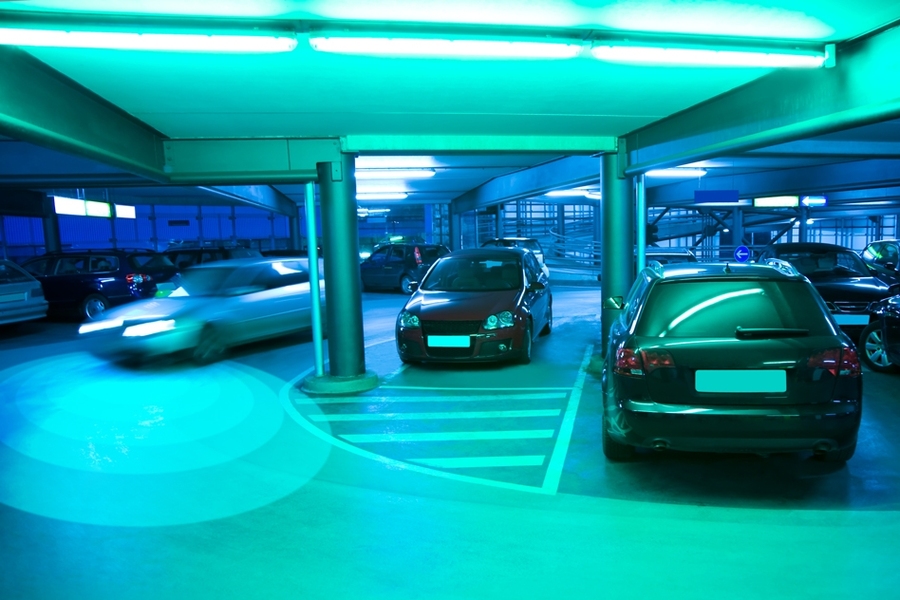
In a separate trial, researchers implemented ShadowCam in an autonomous car within a parking garage, with headlights turned off to simulate nighttime driving conditions. They compared vehicle detection times against LiDAR technology. In representative scenarios, ShadowCam detected cars turning around pillars approximately 0.72 seconds faster than LiDAR. Furthermore, because researchers had specifically calibrated ShadowCam to the garage's lighting conditions, the system achieved approximately 86% classification accuracy.
Looking ahead, the research team aims to enhance the system's functionality across diverse indoor and outdoor lighting conditions. Future developments may also focus on accelerating shadow detection processing and automating the annotation of targeted areas for shadow sensing.
This innovative research was made possible through funding from the Toyota Research Institute.

